Frisco, TX: One of the Best Suburbs to Live in the Dallas-Fort Worth Area
Ask ten people in North Texas to name the best DFW suburb and you'll get Frisco more than any other answer but "best" isn't a useful word without context. Best compared to what? Best for whom? DFW has dozens of strong suburbs, and several of them beat Frisco on at least one important measure. What Frisco actually does better than almost anywhere else in the metroplex is combine several strengths at once, in a way few of its neighbors manage. Here's a full look at why Frisco keeps winning the "best suburb" conversation, where it genuinely outperforms its neighbors, and what to know before deciding it's the right one for you.
Why Frisco, TX Is a Popular DFW Suburb
The clearest, most current evidence of Frisco's standing came in 2026, when WalletHub's national study of best real estate markets ranked Frisco #1 in the entire country unseating neighboring McKinney, which had held that top spot for three consecutive years. Denton came in at #5 and Allen at #8, meaning four DFW-area cities swept the national top 10, a remarkable concentration for one metro area. But Frisco's win over McKinney specifically is worth sitting with, because it illustrates exactly what sets Frisco apart from the rest of the pack.
The ranking cited several factors working together: Frisco scores well on affordability relative to income (ranking as the 95th-cheapest among 300 cities studied, despite its high sticker prices), nearly 47% of its homes were built between 2010 and 2024 meaning a huge share of the housing stock is essentially new without the premium of true new construction and the city posted the seventh-best job growth rate in the country. Add in below-average utility and maintenance costs, and you get a city that performs well on almost every input at once, rather than excelling at one thing while lagging on others.
That's the real answer to "why Frisco": it's not the cheapest DFW suburb, the newest, or the one with the single best school rating. It's the one that scores strongly across cost, housing age, job growth, and schools simultaneously and that combination is genuinely harder to find than any individual strength on its own.
Where Is Frisco, TX and What's Nearby?
Frisco sits in Collin and Denton counties, roughly 25 to 30 miles north of downtown Dallas, bordered by Plano to the south, Little Elm and The Colony to the west, McKinney to the east, and Prosper and Celina to the north. The Dallas North Tollway runs directly through the city, connecting Frisco to the broader North Dallas corridor.
That location places Frisco at the center of what's become the most competitive stretch of suburban real estate in the entire DFW metroplex. Plano, Frisco's southern neighbor, represents the earlier generation of this growth corridor strong rail access via DART, a wider range of housing ages and prices, but a housing stock that mostly dates to the 1980s through 2000s. McKinney, to the east, has spent the past several years as Frisco's closest rival for the "best suburb" title. And to the north, Prosper and Celina represent the newest frontier of growth still-developing cities offering more new construction and lower prices than Frisco at the cost of a less finished city around them.
Understanding where Frisco sits in that progression newer than Plano, more finished than Prosper or Celina, and a close, ongoing rival to McKinney is the key to understanding what you're actually choosing when you pick Frisco over its neighbors.
What Is It Like Living in Frisco, TX?
Frisco carries itself like a bigger city than its suburb label suggests. With roughly 219,000 residents, it's large enough to support major-league sports venues, a substantial corporate employment base, and a retail and dining scene that rivals much larger metro areas while still being organized around planned, amenity-dense residential neighborhoods rather than dense urban blocks. Niche.com currently gives Frisco an overall A+ grade, reflecting that combination of scale and polish.
Daily life here is thoroughly car-dependent, as in most of DFW, but Frisco's extensive park and trail network gives residents more car-free recreational options than many neighboring suburbs. The city's identity has also been shaped significantly by its sports and entertainment infrastructure something genuinely unique among DFW suburbs, discussed in more detail below which gives Frisco a sense of civic identity that extends well beyond being a bedroom community for Dallas commuters.
Frisco TX Real Estate: What Home Buyers Can Expect
Frisco's real estate market reflects its maturity relative to its northern neighbors. Median home values run around $642,100 nearly double the national average and meaningfully higher than Plano ($471,800) or Allen ($464,100) while median sale prices have recently tracked closer to $655,000, down modestly from recent peaks as the broader DFW market has cooled.
The core tradeoff buyers face in Frisco versus its neighbors comes down to this: Plano offers a wider price range and established rail access but older housing stock; Prosper and Celina offer significantly more new construction and lower entry prices but a less finished city around the home; Frisco sits in between, offering a largely (though not entirely) built-out city with housing that's mostly newer without being under active construction. For a detailed breakdown of Frisco pricing by segment and neighborhood, a dedicated real estate guide is the better resource the short version here is that Frisco commands a genuine premium over its neighbors, and that premium buys a more finished, lower-hassle buying experience than a still-growing city further out.
Best Frisco TX Neighborhoods to Know
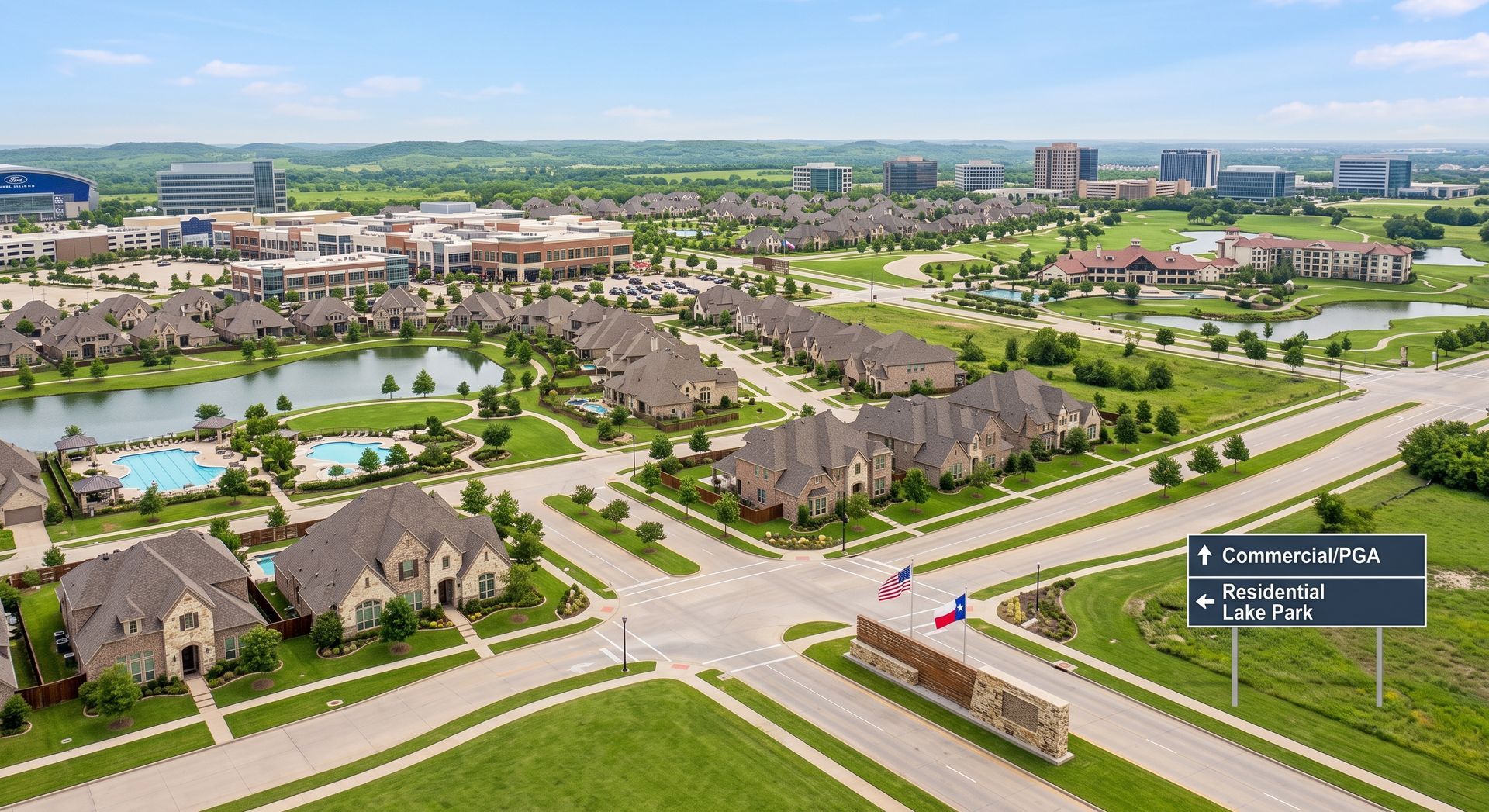
Frisco's neighborhood landscape spans multiple distinct eras of development. Established, guard-gated communities like Starwood offer mature landscaping and private amenities near the Dallas North Tollway. Central Frisco neighborhoods like Shaddock Creek Estates and Chapel Creek provide a more accessible entry point into the city's strong schools without a gated-community premium. Master-planned communities like Phillips Creek Ranch and Hollyhock deliver resort-style amenities in a largely finished setting, while Edgestone at Legacy puts residents within easy reach of the Legacy West retail corridor.
This is only a snapshot Frisco has enough distinct neighborhoods, each with meaningfully different pricing, architecture, and HOA structures, that the subject deserves its own dedicated comparison rather than a short summary here.
New Construction Homes in Frisco TX
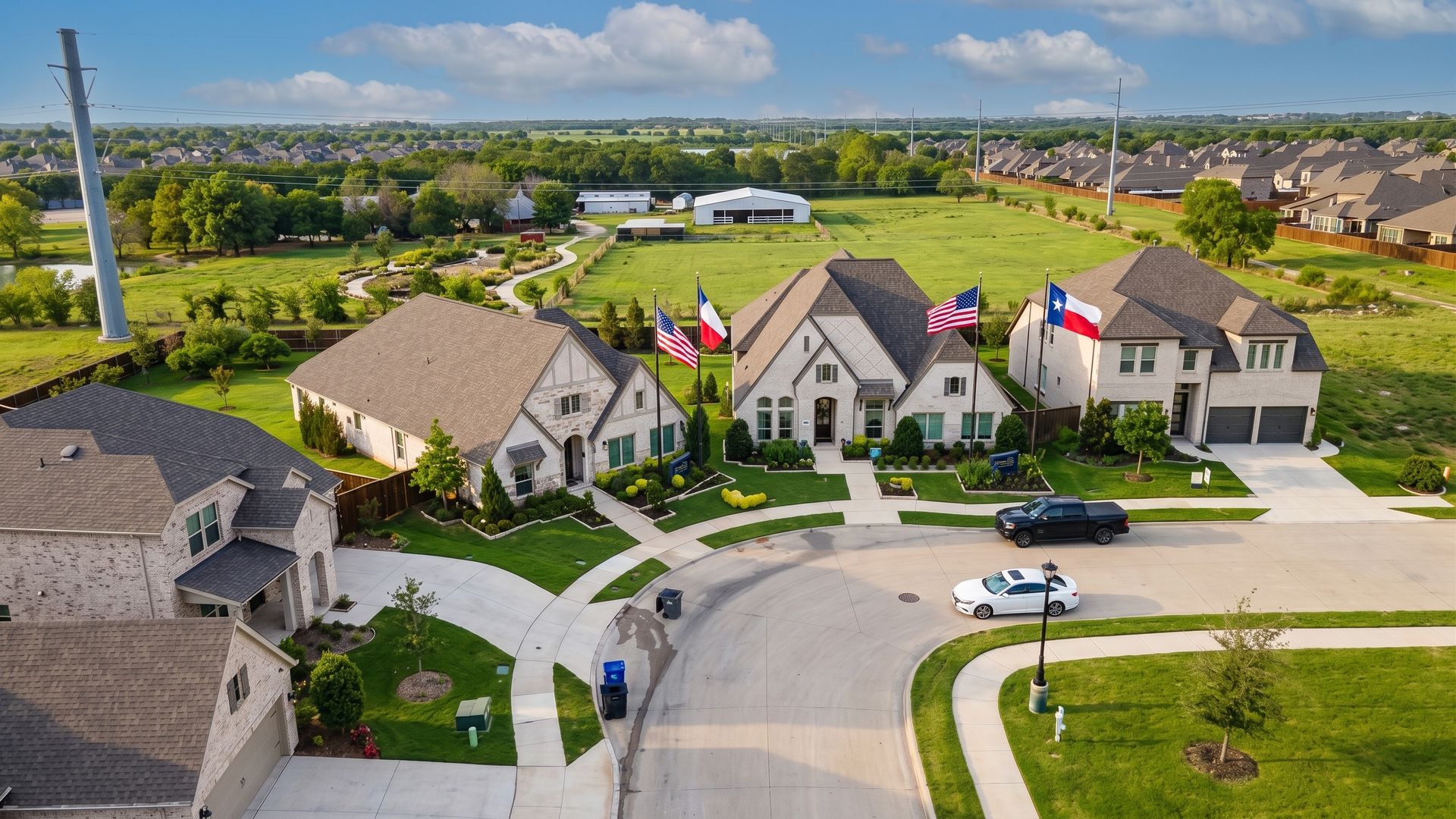
This is one area where Frisco genuinely differs from how it's often perceived. Because the city is now largely built out, active new construction has become concentrated rather than spread throughout the city and one development in particular has changed the picture significantly. The Fields, a roughly 2,500-acre master-planned development in northern Frisco along the Dallas North Tollway, is approximately ten times the size of Legacy West and is currently under active construction, with single-family neighborhoods like Brookside North and South already building homes from major builders, plus a gated custom-home section called The Preserve.
Outside The Fields, new construction in Frisco is limited mostly to smaller infill pockets, which makes Frisco a meaningfully different new-construction market than neighbors like Celina or Prosper, where new-phase master-planned communities are still the dominant form of available inventory. Buyers who specifically want new construction inside Frisco's city limits should expect a much narrower set of options than in those faster-growing neighbors concentrated almost entirely around The Fields.
Schools in Frisco: What Home Buyers Should Know
Frisco's school reputation is one of its clearest, most consistent advantages, and it's worth being specific about how it actually compares to neighboring districts rather than taking "great schools" as a given. Frisco ISD holds a strong A rating in recent Texas Education Agency accountability ratings, putting it in the same top tier as Allen ISD, which also holds an A rating, while Plano ISD has generally posted a slightly lower B-range rating in recent comparisons.
The practical nuance for Frisco buyers: because the city spans portions of Frisco ISD, Plano ISD, and Prosper ISD depending on the specific address, not every home inside Frisco's city limits is actually zoned to Frisco ISD. It's worth confirming the exact school assignment for any address under consideration, since a strong citywide reputation doesn't guarantee uniform results at the individual campus level, particularly as the district has grown and added newer schools to keep pace with development in northern Frisco.
Things to Do in Frisco TX
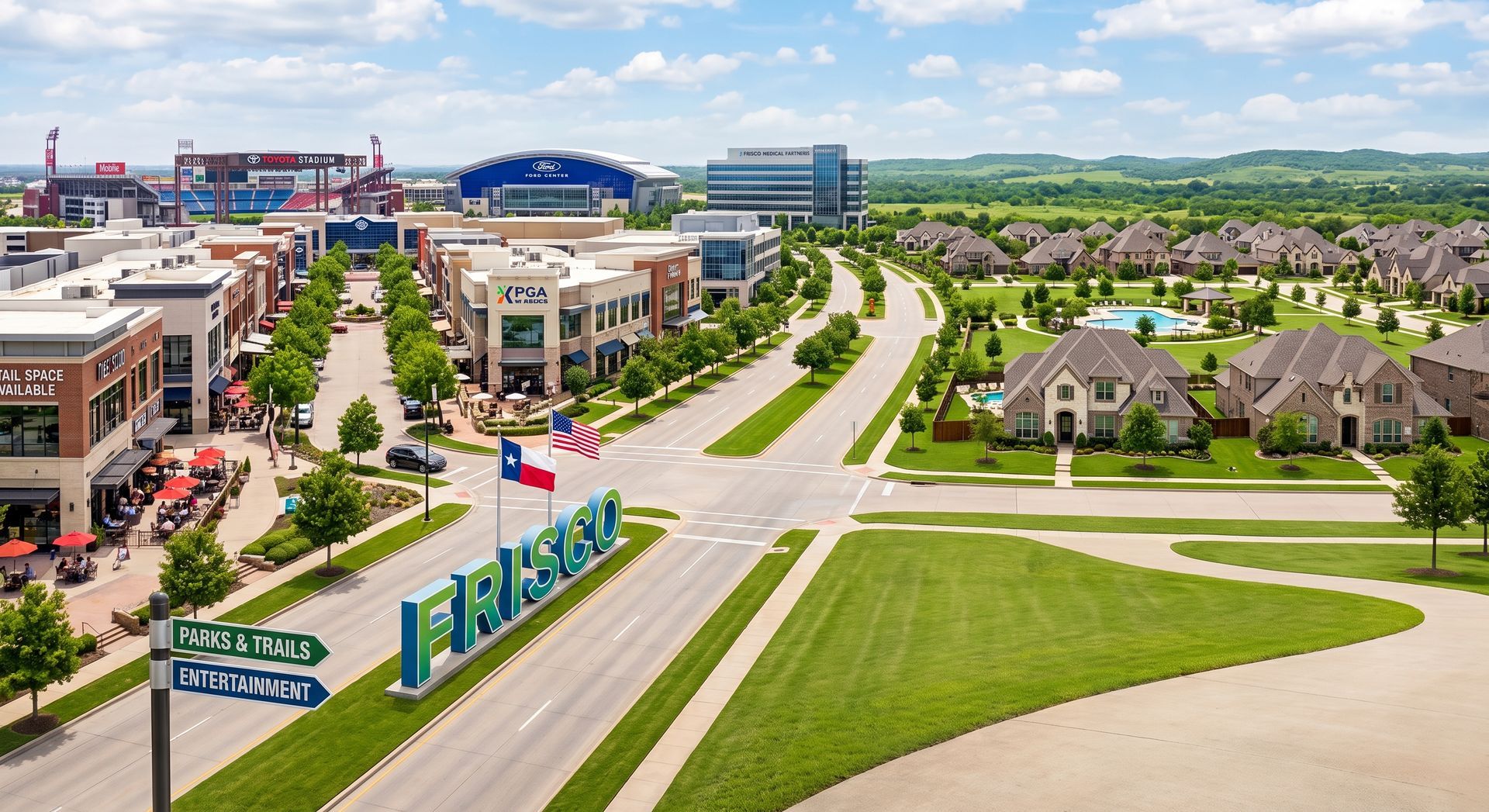
This is where Frisco separates itself most clearly from nearly every other DFW suburb, including its closest rivals. Frisco is home to the Dallas Cowboys' world headquarters and practice facility, an FC Dallas Major League Soccer stadium, and a steady calendar of major concerts and sporting events tied to those venues infrastructure that simply doesn't exist at this scale in Plano, McKinney, Allen, or any of Frisco's northern neighbors. The city has deliberately built its identity around sports and entertainment over the past two decades, and it shows in a way that gives Frisco a draw well beyond its own resident base.
Beyond the marquee venues, Frisco's extensive park and trail system, numerous community centers, and a full calendar of civic events round out a genuinely amenity-dense lifestyle. For families and residents who value having major entertainment and recreation options close to home rather than a drive into Dallas, this is one of Frisco's most distinctive, hardest-to-replicate advantages.
Shopping, Dining & Entertainment in Frisco
Legacy West and The Star in Frisco anchor one of the most significant retail, dining, and corporate employment corridors in the entire DFW metroplex not just a shopping center, but a mixed-use district that draws visitors from across North Texas, not only Frisco residents. Stonebriar Centre adds a large traditional mall experience nearby, giving the city a genuinely deep commercial base that's already fully built and functioning today.
This matters most in direct comparison to Frisco's newer northern neighbors. A buyer choosing Prosper or Celina today is often betting on retail and dining infrastructure that will exist in a few years, once those cities catch up to their population growth. A buyer choosing Frisco gets that infrastructure immediately fully built, already operating, and unlikely to change significantly in the near term. That's a real, tangible tradeoff worth weighing against the lower prices and newer construction available further north.
What Is the Commute Like From Frisco?
Frisco sits along the Dallas North Tollway, giving residents a direct route toward Dallas and the Legacy/Plano employment corridor. Commute times to downtown Dallas typically run 30 to 45 minutes under normal conditions, longer during peak rush hour, with real congestion common near Legacy West and Stonebriar regardless of time of day. For residents working within Frisco itself or in the nearby Legacy corridor, commutes can be considerably shorter a genuine advantage given how much of Frisco's own job base has grown locally rather than requiring a drive into Dallas.
Compared to its northern neighbors, this is one of Frisco's clearer practical wins: a home in Prosper or Celina typically adds 15 to 30 minutes to a downtown Dallas commute compared to a similarly situated Frisco address, simply due to the added distance.
The Pros and Cons of Living in Frisco TX
The case for Frisco: a #1-ranked real estate market nationally as of 2026, strong schools across most of the city, a largely finished retail and entertainment infrastructure that's already built rather than years away, major sports and entertainment venues unmatched by any neighboring suburb, and a shorter commute to Dallas than most of its faster-growing northern neighbors.
The case against: home prices running well above Plano, Allen, and especially Prosper or Celina; new construction options that have narrowed significantly and are now concentrated almost entirely around The Fields; real, persistent tollway and retail-corridor traffic; and a city mature enough that buyers specifically chasing the newest floor plans and lowest prices will generally find better options in Frisco's northern neighbors.
Who Is Frisco, TX a Good Fit For?
Frisco tends to be the right call for buyers who want a largely finished city with strong schools, deep entertainment and retail infrastructure already in place, and are comfortable paying a real premium over nearby alternatives for that combination. It's an especially strong fit for buyers who work in or near the Legacy/Plano corridor, families prioritizing consistent school quality across most of the city, and anyone who values having major sports and entertainment venues close to home.
It's a tougher fit for buyers specifically chasing the newest construction at the lowest price, who will generally do better in Prosper or Celina, and for buyers on a tighter budget who may find more home for the money in Plano or Allen without giving up much on schools or location.
Is Frisco, TX the Right DFW Suburb for Your Move?
Frisco's case isn't that it beats every neighboring suburb on every measure Allen edges it on school ratings in some comparisons, Plano offers more price range and rail access, and Prosper and Celina both offer more new construction at lower prices. Frisco's real advantage is that it doesn't ask you to trade one of those things for another the way most of its neighbors do: strong schools, a finished retail and entertainment base, solid job growth, and a shorter Dallas commute all show up in the same city at once. For a lot of buyers, that combination is worth the premium Frisco commands over the suburbs around it.
If you're weighing Frisco against its neighbors and want a straight, locally informed comparison based on your specific budget, schools, and commute needs, reach out to Zak Schmidt at 469-707-9077 .
FAQs About Living in Frisco, TX
What makes Frisco stand out compared to other DFW suburbs?
Frisco’s main advantage is how many strengths show up together in the same place: strong school performance, solid job growth, a more finished retail and entertainment infrastructure that’s already operating, and a relatively shorter commute to Dallas than many faster-growing northern neighbors.
Is Frisco the most affordable suburb in the Dallas area?
No. Frisco generally costs more than nearby options like Plano, Allen, and especially Prosper or Celina. The tradeoff is that buyers are typically paying for a “lower-hassle” experience: a largely built-out city, well-established amenities, and strong overall performance across affordability, housing age, and schools.
How far is Frisco from downtown Dallas, and what’s the commute like?
Frisco is about 25 to 30 miles north of downtown Dallas. Commutes typically run around 30 to 45 minutes under normal conditions, but can be longer during peak rush hour—especially around busy corridors near Legacy West and Stonebriar. Frisco also tends to be a practical win versus Prosper or Celina, which usually add roughly 15 to 30 minutes for a downtown Dallas commute.
Are all homes in Frisco zoned to Frisco ISD?
No. Frisco can include areas zoned to Frisco ISD, Plano ISD, and Prosper ISD depending on the specific address. Even though Frisco ISD has a strong reputation overall, it’s important to confirm the exact school assignment for any property you’re considering.
What should home buyers expect from new construction in Frisco?
Because Frisco is largely built out, new construction is more concentrated than in nearby growth areas. The biggest active development is The Fields, along the Dallas North Tollway. Outside that area, you’ll usually find smaller infill options rather than the large, ongoing master-planned phases you may see in cities like Celina or Prosper.

Zak Schmidt
From in-depth property tours and builder reviews to practical how-to guides and community insights, I make navigating the real estate process easy and enjoyable.