Buying a New Construction Home in DFW? Know Your True Monthly Payment
Everything in a model home is designed to make you feel something. The lighting, the smell, the colors, the furniture that's really nice, the way they walk you through the house and show you around, and the music they play, all of that is put in there to invoke emotion. And here's the thing, it works, because at the end of the day, buying a house or buying a home is an emotional decision. There's nothing wrong with that, but here's one of the challenges that comes with it: you get all excited and you find the thing you love and you see all the different things and you forget what's actually happening in that room. Oftentimes we make an emotional decision and we forget about the numbers. Then by the time we start working on the numbers, our emotions have talked us into something that we maybe shouldn't be looking at or maybe shouldn't be considering trying to buy. You go look at the price and it's like, oh yeah, we can make this work. Then you start getting all the rest of the numbers, the taxes, the HOA, the insurance, the what's the actual interest rate, and you've fallen in love and you're attached to a floor plan, and then reality sets in and you have a problem.
Nobody sits in those model homes and does the math on, okay, well, if I carry this loan for 30 years, what's the amortization going to be, what's the total cost. Nobody's doing that, and I'm not saying that you should do that, but I am saying from a mindset standpoint, we should probably be thinking about how that monthly math plays out as we're getting ready to make this purchase, because it is a big purchase. I want to walk you through what levers actually get pulled and what things actually matter that impact how that monthly payment fits so that you don't walk in, find a house that you love, only to be totally heartbroken at the end of the day when the payment doesn't come back where you want it to be.
Most people shop on the big number, but you buy on the monthly number. We go to Zillow or we go to Realtor and we type in and we're searching homes from $450,000 to $500,000 or whatever your price range is. That's kind of how we start searching. But what you're really buying is you're buying a monthly payment. What is this actually going to cost us every month, because that's the part that actually touches your life. The monthly payment is what determines, hey, do our kids still play sports or do we get to go out to eat this many times or are we saving to go on a cruise or go on vacation or do we get to live generously or am I funding my retirement, or did we just buy the house and we're all sleeping on air mattresses because we can't afford to do anything else. This is what I want to kind of walk you through: what levers actually get pulled and what things actually matter that impact how that monthly payment fits.
Table of Contents
- Total Tax Rate: The Number Almost Nobody Checks
- HOA Fees: The Permanent Cost You Can't Escape
- Rate Structure: Where Builders Manipulate Your Monthly Payment
- Tax Reassessment: Why Your Payment Jumps the Year After You Close
- Rockwall vs Celina vs Wylie: What You Get for What You Pay
- Which Payment Strategy Is Right for You
- Questions to Ask Before You Fall in Love with a House
Total Tax Rate: The Number Almost Nobody Checks
This is not saying that this is the end-all be-all, but you need to understand this: the total tax rate. When you go into a neighborhood or you go into a development and you look at, hey, tell me about the tax rate, and they say, well, it's 2.1, and then you plus this, and you're like, well, what does that mean? It's like, well, the county taxes and the city taxes are this, and then you add in some sort of alphabet soup, a MUD or a PID or a TERS or an MMD and you're like, what in the world. Just give me the total, the total percentage number. It's usually your county taxes, so your hospitals, your roads, your police, your fire, your school districts, and then the MUD or the PID is usually based on the development that you're buying in.
In DFW, if you're not from here, property taxes are going to run you somewhere in the neighborhood of 1.5% to, I've seen them as high as 3% in some neighborhoods. You need to really understand that because on a $450,000 house, let's say you're buying in a neighborhood that's a 1.9% property tax rate. Well, that property tax rate is one number, and then you go across town, you end up in a 2.5%. Your monthly payment just went up probably $300 to $400, which means it's a bigger constraint on you and your budget, and it lowers your buying power because again, it's all factored into that total monthly budget.
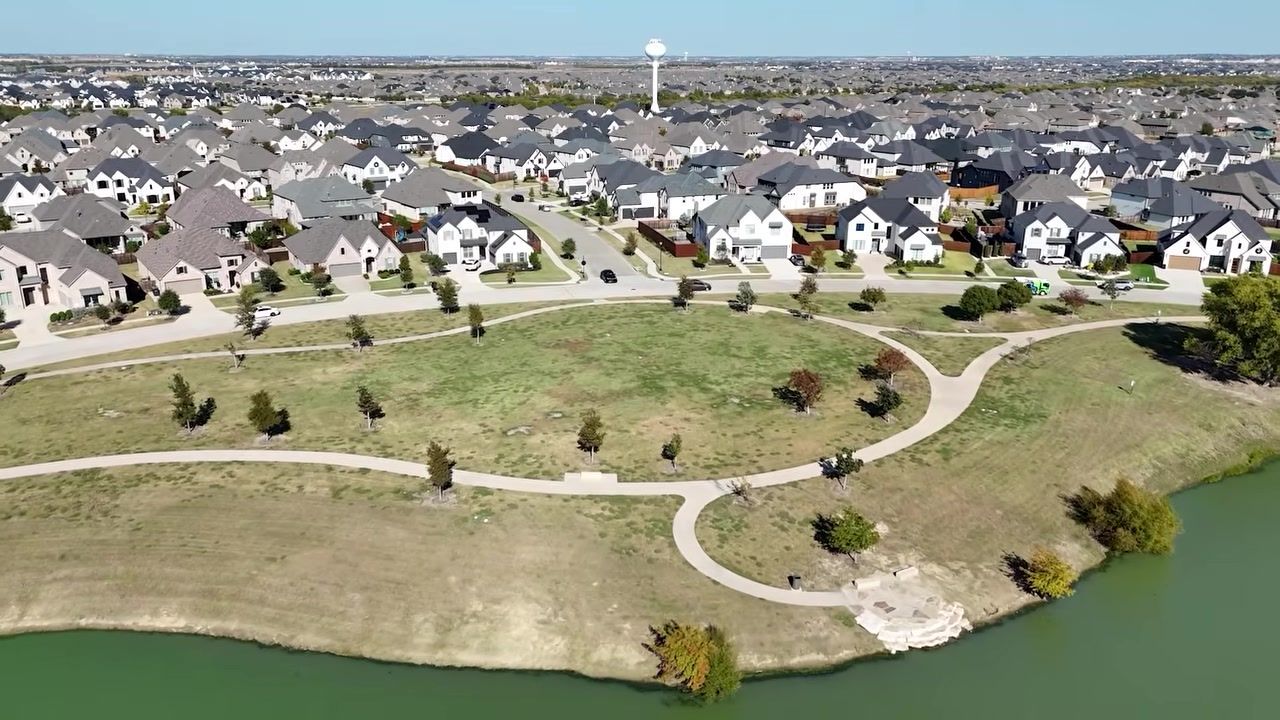
Some people will argue in DFW, a lot of the way development happens is with what's called MUDs and PID taxes, and they are basically development taxes. So it pays for the roads, the sewer, the water, the upkeep, all of those things. You would say, ah, that feels like a scam. And maybe to some of you it does, but truthfully, it has to get paid for somewhere. Whether the developer says, hey, we're going to do this on a tax, or we're going to roll it into the cost of the lot, and then you pay more for the home, which then means the builders have their margins compressed, which means they put less features in there because they're spending more on those lots, which then raises their purchase price, which raises your purchase price. Either way, unfortunately, whether you like it or not, you're gonna have to be the one that pays for it.
When you see advertisements online and they're like, oh well, you can get into this neighborhood for $3,000 a month, and you're like, oh well, that actually doesn't sound too bad. And it's like, oh, fine print: principal and interest based on 20% down and not including your taxes. And you're like, oh yeah, my taxes, that was another like $700 a month. Plus my insurance and my PMI and all of that. It adds up. This is probably the biggest thing that I think a lot of people don't realize, and a lot of people don't talk about, because it changes based on the development. And sometimes it changes based on the street within the development, based on where, how the district was drawn or how the developer put it together. Make sure you're asking about total taxes.
HOA Fees: The Permanent Cost You Can't Escape
Another one that a lot of people may not account for is your HOA bill. As you're thinking about your monthly expenses in your monthly budget, most of the time the HOA is not paid as part of your mortgage. It is usually paid separately, whether it's paid biannually or it's paid quarterly or it's paid monthly. Either way, you need to factor that cost in. Figure your HOA on average here in Texas somewhere probably between $700 and on the high end $1,800 for the year. It is a permanent thing. As long as you live in that HOA.
I have to be honest with you, there are few and far between new neighborhoods that are actually large new neighborhoods that you want to be in that do not have an HOA. Any good reputable builder that you're buying from, the Highlands, the Perrys, the David Weekleys, the Bloomfields, the Chesmars, all of those, hardly any of them have neighborhoods that they build in that they don't have some sort of HOA attached to it. You just need to factor that piece in because it is never going to go away for the life of what you're buying.
Make sure you understand what the cost is, what the cost is to get into the HOA, what the transfer is, because there's going to be some fees. There's a couple neighborhoods that we've sold in recently that have a really high transfer or initiation, initiation is the wrong word, but like a welcome fee, like, hey, you're joining the HOA, here's your welcome packet, $3,000. And people are like, what happened? Why did we pay that? It's like, yeah, it was part of the HOA. Just make sure you understand that. Make sure you understand what the HOA covers, what it doesn't cover. Is it paying for your front yard maintenance? Is it paying for no yard maintenance? Is it just the pools? Is it the parks? What is that covered? Because that is going to be an additional expense that you're going to have to make sure you cover.
Rate Structure: Where Builders Manipulate Your Monthly Payment
The thing that gets the most manipulation in a transaction, which is a lot of what the builders are doing right now, is your rate structure. So the rate at which you pay on your mortgage. Right now if you look online, rates average in the high 6s, they're pushing towards 7. It's crazy. Builders are buying down rates, and if you see them advertising at 4.99 or a 3-2-1 buydown or a 5.75%, you need to understand the structure of how that rate is set up.
This is probably one of the biggest, this and your tax rate are the 2 biggest things that will impact your monthly payment the most. Even in that, hey, is it a permanent buydown? Are we locking this rate for the 30-year term of this loan? Is it temporary? Is it a 3, you know, hey, we're doing it for 3 years and then it's going to go up? Is it an adjustable rate mortgage. Those have kind of come back around. I actually just had some clients close on an ARM adjustable rate mortgage. They got a 4.75% for the first 7 years of the loan. I asked him, I said, what was the plan? He goes, well, he goes, we're going to hold it for 7 years. And he goes, by that point, our kids are going to be out of high school and we're going to be looking to probably resell, or in worst case scenario, we will refinance. So it worked for their specific scenario. Not saying it 100% works for yours. I'm just saying you're gonna see that. Just know that you're gonna see some things that structure and fluctuate there.
That is the biggest way to manipulate your monthly payment. So shop, if you're doing that, just shop on what the permanent rate is gonna be, just so you are aware. When you see a builder advertising rates as low as 3.75%, this is what I was trying to talk about. This is a 3-2-1 buydown. So year 1, year 2, year 3, and year 4. The plan on this, if you're looking at something like this, the understanding is you need to be able to have a game plan to get out of it when we get to the end. 4.75, 3.75, 3.45, and then 6. The understanding is you need to be able to have a game plan to get out of it when we get to the end.
Tax Reassessment: Why Your Payment Jumps the Year After You Close
That tax rate that you're buying at, that tax rate is set unless we have a major reconfiguration of the laws here in Texas, what the tax rate is, it is what it is. But the percentage that, or the value that you pay on that tax every year is what's going to change. Because in Texas, the way they do this, whether we like it or not, is the county does a reassessment every single year, and they assess it based on market value. If you're paying a 2.2% tax rate, well, okay, well, this year your market value was, let's call it $450,000. So you're paying 2.2% on $450,000. Well, then the market goes up and okay, now it's, hey, we went up to $465,000. Okay, well, now we're paying 2.2% on $465,000. And then the number shifts and you're like, wait, it's the same house. Why is it not set?
I know some states would say, hey, we set our taxes based on the purchase price. Maybe that would be a little bit easier. We, for whatever reason in Texas, do not choose to do that. So it is going to fluctuate every year. Percentage won't change. The number you pay will change, which is also why we talk about the importance of putting in your homestead exemption and making sure that you can lower your taxes there.
If you're buying a new construction home, make sure your lender is having the tax conversation with you. Oftentimes what happens, assessments in Texas come out sometime March, April-ish of the year. If the house has not been fully completed yet, they're going to assess only on the value of the land. And it's like, oh, that feels good, and your taxes are super low. Because, oh, the value of the land is $30,000. And then you pay your 2% on $30,000. And then the next year, when your assessment comes out, it's like, oh, we have a full-on actual house here. Now it's $500,000. And then your tax bill jumps astronomically.

As you're working with the lender for the new builder, make sure you're, if you are escrowing on your taxes, make sure you have that conversation about how they're doing it. Most good new construction lenders do it on 80% of the purchase price so that you don't have a massive shortage in your escrow account and then hit the massive wall of payment shock. Like, oh crap, our payment just went up by $1,000 a month to cover our tax shortage. Have that conversation. And again, just know your taxes are going to fluctuate every single year based on how the county assesses your value.
You can protest it. There's a whole process. I'll tell you, it's kind of dumb. I'm just being truthful and being honest with you as somebody who owns several properties here in Texas. I think the way we do it is kind of dumb, but just be aware that is going to change. Do not let them show you, some of the builders that move tons of volume can tend to be a little bit deceitful in how those taxes are collected so that they can show you a lower monthly payment. Because then it'll be like, oh well, we got you in, we sold you the house, we don't care, we moved on, we made our money. Ask the questions on the taxes, ask the questions on the total tax rate, because these are the big things. As we shop on the big number but we buy on that monthly number, these are things that make the difference of, hey, do we get to take a vacation this year? Do we save for college? Do we, how generous do we get to be within our community or within our church?
Rockwall vs Celina vs Wylie: What You Get for What You Pay
I want to run this for you live to show you how these numbers actually move. Let's just say we have a $450,000 house. We're going to go with 5% down. Easy math, that's $22,500. Market rate right now, 6.75%. This is without touching anything. This is no buydown, nothing from the builder. 6.75%. We're assuming a 740 credit score. And let's say, hey, we're buying somewhere like Rockwall , which Rockwall is going to be a place that has a really good, typically really good tax rates, but purchase prices are a little higher. Let's just say 1.65% in Rockwall is our tax rate.
Texas is one of those places that is kind of volatile when it comes to insurance because North Texas, we know we're going to get hail, we know there's a chance we're always going to get tornadoes. The good news is on a new construction home, it is usually a little bit more affordable because of the energy efficiency, because of the cost to rebuild. But on average, we're seeing, based on what I've seen through some clients, depending on the size of the house and actual location, somewhere between $1,900 and $2,200, $2,300 a year for your homeowner's insurance. So we're gonna go with $1,900 there.
Taxes and insurance right now, property taxes were at $618 on average for that. If we said, hey, I'm going to take this same house at $450,000, same rate, and I'm going to say, hey, we're buying it in a neighborhood, let's say we're going to Celina that might have a tax rate close to 2.5%. So that's $618, $650, $680 now becomes $937. You're seeing this massive swing on property tax money and then pushes toward $1,000 a month. So you're talking about anywhere between $10,000 to $12,000 a year in property taxes.
Finding the neighborhoods without the MUDs, without the PIDs, they are few and far between. And the ones that have them, or the ones that don't have them, usually have a higher purchase price or higher entry point because of how the developer priced those lots. Looking in the Rockwall area, you could look places like The Terraces , places like Park Hill . Any of those 2 neighborhoods would be like a 1.6%, 1.65%. You come down south and you're looking at Sonoma Verde , it's like, hey, well, it's 2% because it includes the PID. But then let's say, hey, we're going back up, pushing up north, and we go to Hillstead in Lavon , which is a great neighborhood, puts you in Wylie ISD . Well, that neighborhood has a 2.51% property tax rate. So good becomes super subjective.
At the same time, you say, well, hey, we changed our payment $300 negative there, but then we said, hey, the builder gave us a little bit of money and we got our rate down from a 6.75% to a 5.25%, and we saved a little bit on our principal and interest. All of these things kind of factor together. Yes, I do want you to get excited and love the house that you're buying, but I also want you to run the numbers and make sure that they make sense. But also, yes, I don't want you to get so caught up in the numbers that you can't see the benefit at the end of the road for the house that you're actually buying.
Let me just kind of have a heart-to-heart with you really quick if we're gonna build. If you're building, there is no way to know with certainty what your payment is going to be because it's going to take us 6 months minimum to build that house. And rates could go up, rates could go down. There's so many different factors. If you're building, I know we want to get kind of close and you're saying, hey, I need my monthly payment to be exactly this. There is no way that I can give you that certainty and that peace of mind for you to walk through that process and build. Maybe you're the person that needs to truly shift back to an inventory home because those numbers get a little bit more absolute, a little bit more concrete.
I would say if you're building, I would plan conservatively. I would plan a delta or a change, probably $150 to $200 either direction. So it could swing up $200, it could swing down $200 depending on when exactly we close, what exactly is happening in the rate market. A good new construction lender is going to be looking at those rates, and if there's a chance for you to be able to lock it long term they will offer that to you, and you might want to consider that. But with a builder, most of them are not doing long-term rate locks. That's a whole other thing. But just know, if you're going to build, if we're having this conversation and you want to build here in DFW and you want to take the 6 to 8 months, payment-wise, you need to plan a $200 conservatively swing. I would rather shoot high and come in under that than you'd be surprised by that.
You can take the standard homestead exemption, which is $140 off the basis. You can take an over 65, which pushes us to $200,000. Or if you have a 100% disability status with the VA, you can take a 100% there as well. Just know on this one and really on all of these exemptions, we just need to make sure we understand how it plays in with the MUD and the PID, because you may not be exempt from the PID tax. You might be on the MUD. We just got to check it and make sure. It moved the payment, moved us down. So we were $600, saved us about $200 a month. And then if we come back to our 2.5 here, we're back at $700. So again, saving us about $200 a month. Not a massive, massive savings, but definitely not zero. Super important, you're buying in Texas, we want to file that homestead exemption to make sure that it factors into our monthly payment.
I want to show you pricing-wise, the other thing that factors into this is what you're getting for what you're spending. We were talking about something $500,000, $450,000, $500,000. Let's just see what we can find. Let's say we come down here to Sonoma and we say, hey, I want a house on a 60-foot lot. We're looking at Highland just to see, and we've got, hey, look at what, $475,000, $475,000, $499,000. These are 60-foot-wide lots. This is a 2% total tax rate. And look at this, their advertising rates as low as 3.75%. So this is what I was trying to talk about earlier. This is a 3-2-1 buydown. So year 1, year 2, year 3, and year 4. 4.75, 3.75, 3.45, and then 6. But again, 60-foot wide lot in Sonoma on the south side of Rockwall, $475,000, 2,200 square feet.
Now if you said, hey, I want to do the same thing and I want to be up north, then you said, hey, let's go into maybe we go to Trinity Falls . Let's just check a 40-foot lot, Trinity Falls, McKinney. These are going to be 40-foot lots, rear entry garage, and your base price $469,000. So this smaller lot, smaller footprint, higher taxes, you can kind of start to see how all of this plays in and is a factor in that decision that you're making.
Which Payment Strategy Is Right for You
People ask me what's good. Good is so subjective. It really depends on you. This is where the emotions kind of in some ways override if you're willing to pay more, knowing that, like, love the house, love the neighborhood, love the school district. Hey, our church is down the street and our kids are involved in things here. Then that overrides the taxes. If you're like, oh well, I'm just going to keep looking, well then shift it back that direction.
Some of you are hyper logical. You're like, yeah, we have a spreadsheet on spreadsheets on spreadsheets and we figured it out to the exact cent and we're not going to leave any emotion in there. And then the problem with that is you buy based on the deal and not the house. And then it ends up not being a right fit for your family. And then some of you that I talked to are on the opposite end of the spectrum. You're like, I love it. It's the most prettiest thing in the world. And my heart is here. And you're like, well, how are you going to pay for it? And you're like, I don't know. God's going to provide, which was a very real thing somebody said to me one time. And I believe that, but not in that sense. We've got to hit it somewhere in the middle. Emotion is not wrong. Logic is not wrong. Here's where we've got to get kind of both together so that the deal fits for you.
Builders, when they price homes, they price them based on, hey, the big number, because it's easy to compare against, hey, Highland's price is this. Well, Beazer's price is that. Well, David Weekley's price is that. Those are super easy to look at and compare against. Zillow, when we get online and we sort, they price it that way too. But then your monthly is the downstream of all of those things. And you've got to get that there. As we shop on the big number but we buy on that monthly number, these are things that make the difference of, hey, do we get to take a vacation this year? Do we save for college? How generous do we get to be within our community or within our church? All of those things kind of piece this together.
Questions to Ask Before You Fall in Love with a House
I want to give you some practical questions. I kind of hinted at them throughout, but I want to give you these just to make sure you understand as you're asking and working through your numbers to make your monthly budget work.
Total tax rate on the specific lot that you're buying. If you're buying 123 Main Street, I want the total tax rate including everything on that one. If I'm buying 456 Tree Street, tell me the tax rate there.
Ask about the HOA. What does it cover? Not only the monthly fees of the HOA, the transfer fee of the HOA to make sure that you're, because if the builder says, hey, we're giving you a lot of money in closing costs, but it's going to get eaten by a large HOA initiation or transfer fee, make sure you know that. Total tax rate on a specific lot. Total HOA and what is it covered.
Lender question: are we escrowing on land or completed value, and what is going to be my estimated monthly all-in? Good builder lender, if they don't have the full assessment on that land, probably 80% of purchase price.
Those are probably the biggest ones I would be asking before we ever decide to fall in love with a house. We work hard to get you into the best house this side of heaven for you and your family. If you want your own numbers run, drop the community and price in the comments, I'll break down your real, all-in monthly payment. Or if you want to talk through your specific situation and figure out what makes sense for where you're moving and what you're looking for, call or text me at 469-707-9077 or book a FREE consultation here. I'd love to walk through your numbers and help you find the right fit.
FAQ
What is the total tax rate in DFW and how does it affect my payment?
In DFW, property taxes run somewhere between 1.5% and 3% depending on the neighborhood. That total rate includes county taxes, city taxes, school district, and any MUD, PID, TERS, or MMD sitting on your specific lot. On a $450,000 house, the difference between a 1.9% rate and a 2.5% rate is about $300 to $400 a month, which is a massive constraint on your budget and lowers your buying power.
Do MUD and PID taxes ever go away?
MUD and PID taxes are development taxes that pay for roads, sewer, water, and upkeep. They have to get paid for somewhere. Whether the developer rolls it into the cost of the lot and you pay more for the home, or they do it as a tax, either way you're the one that pays for it. The percentage is locked, but the dollar amount you pay will change every year based on how the county assesses your home's market value.
What should I know about HOA fees before I buy?
HOA fees in Texas run somewhere between $700 and $1,800 for the year. It is a permanent thing as long as you live in that HOA. Most of the time the HOA is not paid as part of your mortgage, it's paid separately, biannually, quarterly, or monthly. Make sure you understand what the cost is to get into the HOA, what the transfer fee is, and what the HOA actually covers, because some neighborhoods have a really high welcome fee of $3,000 or more.
How do rate buydowns work and should I trust the advertised rate?
Builders are buying down rates right now, and if you see them advertising at 4.99% or a 3-2-1 buydown or 5.75%, you need to understand the structure of how that rate is set up. A 3-2-1 buydown means year 1, year 2, year 3, and year 4 at different rates, and then it jumps. The understanding is you need to be able to have a game plan to get out of it when we get to the end. Shop on what the permanent rate is gonna be, just so you are aware.
Why does my tax bill jump the year after I close on new construction?
Assessments in Texas come out sometime March or April of the year. If the house has not been fully completed yet, they're going to assess only on the value of the land. Your taxes are super low because the value of the land is $30,000 and you pay your 2% on $30,000. Then the next year, when your assessment comes out, it's like, oh, we have a full-on actual house here, now it's $500,000, and your tax bill jumps astronomically. Most good new construction lenders escrow on 80% of the purchase price so that you don't have a massive shortage in your escrow account.
Should I build or buy inventory if I need to know my exact payment?
If you're building, there is no way to know with certainty what your payment is going to be because it's going to take us 6 months minimum to build that house, and rates could go up or down. If you need your monthly payment to be exactly a certain number, maybe you're the person that needs to truly shift back to an inventory home because those numbers get a little bit more absolute. If you're building, plan conservatively, a delta or a change of probably $150 to $200 either direction.

Zak Schmidt
From in-depth property tours and builder reviews to practical how-to guides and community insights, I make navigating the real estate process easy and enjoyable.