Buying a Home in DFW: Debt, Credit, and the Real Cost of Affordability
I sat down with a mortgage lender who's written hundreds of loans a year in DFW, and the first thing he told me wasn't about down payments or interest rates. It was about credit cards. He said if you could give one piece of financial advice to buyers, it's this: consumer debt first. Pay off the credit cards before you obsess over putting 20% down. That $500 a month car payment or $600 in combined credit card debt is hitting you at 25 to 29% interest right now. Most auto loans sit between 14 and 24%. I talked to a client the other day who has a car note at 96 months at 18.5%. I tried really hard not to make a face. You're gonna pay for that car three times over.
The math is brutal when you break it down. The same $10,000 applied to a mortgage might save you $60 a month. That same $10,000 in consumer debt? It's costing you $500 a month. So when buyers come in wanting to put 20% down to lower their mortgage payment by $180 or $200, but they're carrying $600 in credit card debt, the answer is no. Consumer debt first. That's the advice most buyers never hear, and it's the single biggest thing that protects your finances long after closing day.
This isn't about qualifying for the biggest loan you can get approved for. It's about understanding which debt actually works against you and building the habits that keep you stable through job loss, car accidents, or a bad month. We also get into building versus buying new construction homes in DFW, why today is always the worst case scenario for interest rates since rates can improve later but price can't, and simple money habits like paying yourself first and giving every dollar a job. Whether you're buying your first home or just trying to get ahead financially, this breaks down the real math behind debt so you can make decisions that actually set you up for the long run.
Table of Contents
- Why Consumer Debt Costs You More Than Your Mortgage Ever Will
- The Payment Trap: Why "Can I Afford This?" Is the Wrong Question
- Buy Now Pay Later Apps Are Undisclosed Debt on Your Bank Statements
- Building vs. Buying: Why Inventory Homes Are Worst Case (and That's Good)
- How to Use Credit Limit Increases to Lower Your Interest Rates
- Giving Every Dollar a Job: The Money Habit That Actually Works
- Real Estate as Equity Growth: Why Holding Beats Saving
- Which Approach Is Right for You: Building, Buying, or Waiting
- Ready to Buy in DFW? Let's Talk About What Actually Fits Your Budget
Why Consumer Debt Costs You More Than Your Mortgage Ever Will
The lender put it this way: if somebody comes in and says they want to put 20% down on a house, that might change their payment from $2,800 to $2,600. Let's say it's $180 or $200 a month. But they've got a $500 a month car payment or $600 in combined credit card debts. The answer is no. Consumer debt first. That consumer debt is hitting at 25 to 29% right now. Most auto loans are 14 to 24%. I was talking to a client the other day who has a car note at 96 months at 18.5%. I couldn't bring myself to react. Internally I was just like, you're gonna pay for that car three times over. That was predatory. Spread thinner than peanut butter in a trailer park.
The reason this matters is that most people don't look at the cost. They look at the payment. Can I make the payment? And people validate one way or the other based on lifestyle. They think, I can make this payment, but I'm gonna have to give up going out once a week or give up coffee. They're not looking at the item in and of itself. It's payment-based. When you start squeezing things so they fit together perfectly like Tetris, you don't account for that one bad month. Or the car accident or the new set of tires. The number one thing the lender sees where somebody had everything going for them and now they don't is that they were packed in perfectly. They didn't have a two-month cushion. Job loss or something happens, and it doesn't take much for it all to fall apart.
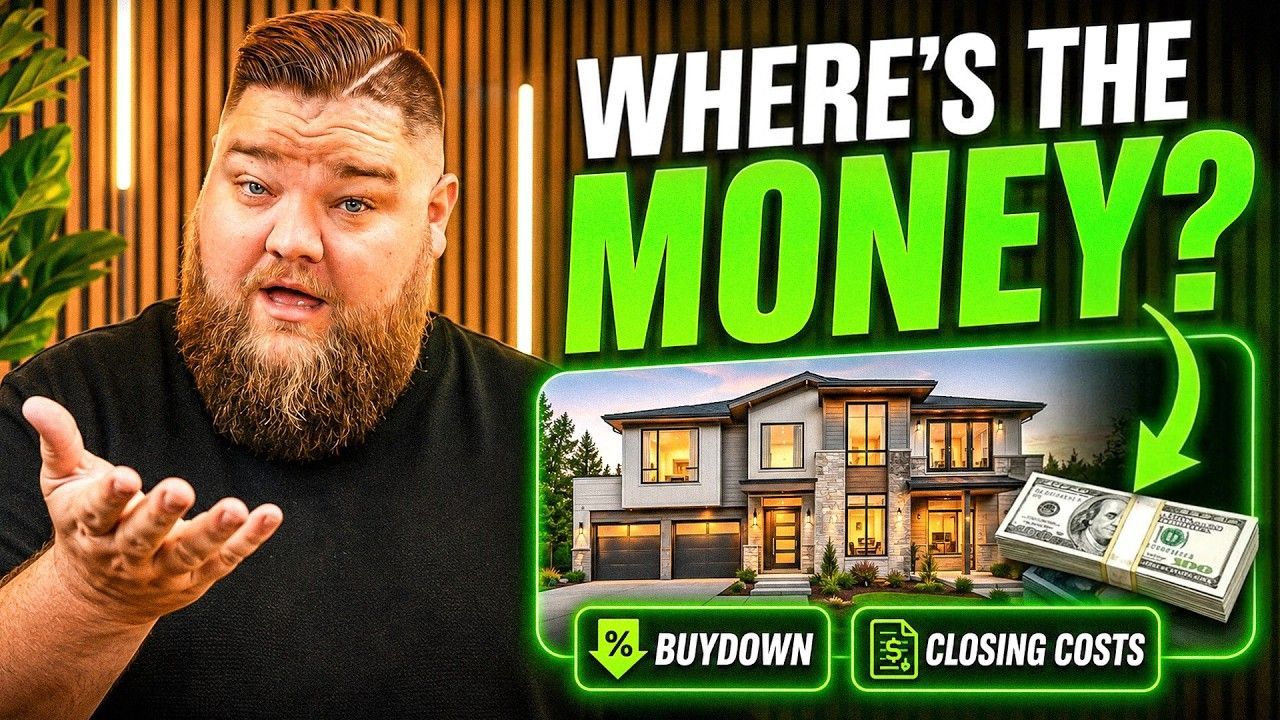
That's the hardest tension I wrestle with in this environment where builders in DFW are putting significant dollars in play to buy down rates to make houses affordable. The marketing is so heavy on here's the payment, here's the payment. We've got to get to the payment. And the big number in some cases doesn't matter. I feel that tension. I'm not gonna carry the loan, but to the lender's point, it's gotta all fit and fit well in our priorities of how the math lives month to month. How do we empower buyers? How do we give them the right framework for thinking on how to spend money to do things like buy a house?
The Payment Trap: Why "Can I Afford This?" Is the Wrong Question
The lender said he's been victim of this at points in his life and career. There were times where it was, we need these things. They're needs, not wants, but we barely can pull it all together. That's a reality for a lot of people, and there's no shame in that. But what you can qualify for and what you can afford and what you're comfortable with are three different things. You could qualify for a mortgage payment that's 45% of your gross income. That's before taxes. When you take your taxes out, when you take out your 401(k), when you take out health insurance, you could qualify for that. Now, can you afford that? Maybe. Probably not.
He's also talked to people that are like, this is all we want to spend. They're disciplined. This is where we're comfortable. But it was 15% of their gross. There's not a right or wrong answer. If people want to feel safe, it's going to be minimize your consumer debt. Buy what you're comfortable with and what you can afford when you do the math after your take-home, because everything we do mortgage-wise is based on gross. There's limits to how much we can lend based on that. But when you start getting into a situation where you're buying a house and we've got to re-shop for furniture or we've got to do this or that, that's a scary situation.
That's the tension. We do a lot of business in the world of builders because they try to do their best to make it attainable. And attainable for you and attainable for me is a sliding scale. I almost want to talk buyers out of it sometimes. Are you really, really for sure that we need to do this? Because even at a starter home at this point, by the time you figure the rising cost of property taxes, the rising cost of insurance, and what the mortgage is, you're at minimum $3,000 a month in a normal $400,000 neighborhood. It's very hard to find a sub-$3,000 mortgage payment in DFW. Or if it is, you're probably further out than you truthfully would want to be. That's a really hard place to be. It's a hard thing to stomach. I'm trying to help buyers budget accordingly and spend the money accordingly and be a good steward of the things they have in front of you.
Buy Now Pay Later Apps Are Undisclosed Debt on Your Bank Statements
The worst thing showing up on buyer files right now? Klarna. Afterpay. Affirm. The lender said somebody's got trade lines. It's undisclosed debt. If you go online to Amazon and you want to buy a $300 pair of shoes and you finance it through Affirm, that payment is going to show up on your bank statement as a recurring expense. So lenders are looking at bank statements and seeing these random charges. It's undisclosed debt because it's not just, I purchased this. It's I owe. Until it's paid in full, it's a debt.
For a lot of people, it doesn't make a big difference. But it is a debt if you are financing a pair of shoes through Affirm or whatever it is. I heard a friend of mine the other day say he's got like eight of them going. I'm like, dude, I'm so stressed for you. I understand the benefit of the resource. I understand what they're trying to do, but the long-term effect of it is probably going to be detrimental because at some point they are going to start reporting on credit. The credit bureaus are going to figure out a way to get their money out of that.
Here's the advice from the lender: it's not always easy to do, but when you were talking about discipline, your interest rates on your credit cards fluctuate. There's a lot of factors to it. When we start looking at debt, every six months you can request a credit limit increase on any credit card. It might not always be given to you because it's going to be looked at like, what's your spending habits, what's your income, whatever. But if you get in the habit of every January, every July requesting those limits, what you'll find is that as long as you're disciplined, you're still only going to spend the same amount.
Building vs. Buying: Why Inventory Homes Are Worst Case (and That's Good)
I asked the lender how buyers should think about building versus buying inventory homes in DFW right now. He said 2020, 2021, 2022 COVID years were kind of a shift here locally with what was going on with builders. Everybody wanted to build a home. You get to pick everything. You get to pick your floor plan, where the doors go, the color of the walls. It depends on the builder, but you get to pick everything. A move-in-ready home is curated from the most popular choices. The security of knowing that today is worst case, and I mean that in all seriousness, tomorrow's going to be worst case. The day after is going to be worst case. You hope for the best, plan for the worst. I don't think hope is a strategy.
So if you can afford it, building a house is great. If you've got flexibility in both affordability, income, debt, all those things, it could be worth a gamble. But the reason you see so many builders with so many inventory right now is because today's worst case. You can buy it today. You know what your sales price is. You know everything. You can see what's on the wall. You know what you're getting. You can paint the walls. When you talk about inventory, as you move up in price in DFW, you see a lot of inventory in the $500,000 to $700,000 range. There's a ton and tons of options there because that's a heavy buyer pool here. The further up you move, the less inventory you start to see. As you move up, the expectation is that you have a little bit more choice and a little bit more opportunity to make things your own.
Coming back the other direction, there's lots of inventory, lots of not good inventory on the lower end. If we're talking financial literacy, sometimes that can be a good opportunity. For somebody that wants that $500,000 or $600,000 house but might not quite be able to afford it, get with somebody like the lender, find a less expensive home, an existing home, but in an appreciable market where you can buy a $300,000 house and it's going to appreciate 10% for the next three years. That's aggressive, but you're in that home saving. You're also getting equity growth. I promise you that you're going to grow equity at a greater rate than you can save. Most people don't have $30,000 extra to put away over a three-year period, whereas equity could do that for you. And then you have that more. But back to what we started with, you've got to get your consumer debt under control to the best of your ability.
How to Use Credit Limit Increases to Lower Your Interest Rates
I don't use my debit card. Everything we do goes on a credit card and then we pay it off at the end of the month. Mainly because I have a fear of my wallet getting stolen and somebody has my debit cards. I can freeze my credit lines. But it took us a long time to get to that level of discipline. We're not going to carry balances on our credit cards. Sometimes things happen, but to the best of our ability, we're not going to carry balances. You've got to get to that disciplined place if you're going to do that.
The lender's advice: every six months you can request a credit limit increase on any credit card. It might not always be given to you because it's going to be looked at like, what's your spending habits, what's your income, whatever. But if you get in the habit of every January, every July requesting those limits, what you'll find is that as long as you're disciplined, you're still only going to spend the same amount. Let's say you spend $3,000 on a $6,000 credit card. That's 50%. You call them and say, I would like a credit limit increase. My income has changed, my spending habits, whatever it is. They bump it up $2,000. So you're at $8,000. Now you've got $3,000 on $8,000. That's one of the biggest factors in utilization. Revolving utilization credit.
If you're disciplined and you keep the spending where it was, your utilization goes down, which means your credit scores go up, which means now interest rates start to come down, which means you're paying less in interest. A year later, so six months later, you've paid this down. Now more of your payment goes towards the reduction because it's less in interest. You're at $2,500 on $8,000. You say, I need a credit limit increase. Instead of that $2,000, they give you another bump. Now you're at like $15,000. I wish somebody would have told me that when I was 20. When you start to understand how credit works, credit utilization, lower utilization means you're more responsible, even though you're spending the same. You just have access to more. Now another creditor says, hey man, they're doing really good over here. I'll offer them another credit card.
Giving Every Dollar a Job: The Money Habit That Actually Works
One thing I wish people would have told me is what we've learned in the last couple years: give every dollar a job. As soon as it hits the bank account, its job might be to pay the mortgage, it might be to put in the savings, it might be to pay the credit card, to do whatever job it's supposed to do, not just sitting idle waiting on me to deploy it. That's probably a huge one. On the other side, you find your people that are making decent livings, doing well. Part of the job then becomes, we have to reinvest, we have to start buying into assets, or we have to start doing things to let the money work for us. I wish somebody would have told me that at 18.
The lender said he's sold every house he's purchased except one. If he could have, he would have kept them all. If he'd have known then what he knows now, absolutely hold on to them. Our very first house was a house we bought when we lived in Phoenix, Arizona for a little bit of time. If I'd have had the means to keep it, because we had it paid down to like $800 a month, and if we'd have just held on through that, we'd have made so much money. That is probably one of our biggest regrets. But we needed the funds in that house. We're at the point now where I will never want to sell any real estate we have. That's why the lender says he wishes he had known. For him, it wasn't so much that he had a lot of equity. It was just the payments. He thought he just had to get rid of the liability, not necessarily turn liability into income. He wishes he'd known all that when he was younger.
The lender said just learn to live on 80% of what you bring home. You should pay yourself first. That's getting paid by your employer, but from that, pay yourself. Celebrate the little wins. Start small, celebrate your wins, pay yourself first. Everybody needs a break. Whether you're making $100,000 a year or you're making a million, at the end of the day, the security of knowing that today is worst case, and I mean that in all seriousness, tomorrow's going to be worst case. You hope for the best, plan for the worst. I don't think hope is a strategy. So in reality, today is always the worst case.
Real Estate as Equity Growth: Why Holding Beats Saving
The lender said it's a huge transfer of wealth from one generation to another. The amount of people he's seen talk about recently, the parents that are in their 50s and 60s that have kids that are my age, like in their 30s, they're saying, we don't want to give your inheritance later. Your inheritance is coming now because it would be more of a benefit. Not everybody has that situation where their parents can do that. But it's almost like there's this weird fork in the road where I see older people that are like, nope, I'm spending everything I have, I'm not leaving them anything. And then there's the other side where it's like, if I have the $100,000, I could help them buy their first house right now, and that's their inheritance. And it would mean more to them now than it would in 30, 40 years from now. Which is kind of the goal. We want to be at a place where we set our kids up to be better off than what we were.
The lender tells his kids all the time, realistically, I'm probably the only male you'll ever meet that wants you to do better than me. Your employers and all the people you meet along your life, they want to be better. So I'm here to help you in any way I can. I want you to have more. I don't look at it as entitlement. I look at it as my responsibility to help you get there. What he sees a lot of is people grow up in their parents' family home, so when they get married and move out, that's the expectation. That's what they think. He's trying to teach his kids, advance through maybe a better priced home and also something that needs work. That's the hardest part because you have part of that older generation that's like, my first house was $50,000. And I'm like, okay, I can appreciate that, but that doesn't exist. There's a tension there. How do we start out well and buy in something that makes sense?
The lender said when you're talking to builders that are giving money to make things affordable, it's important to understand the time horizon. A good deal in the first three years of your mortgage or your purchase might be a terrible deal in years seven through 10. But conversely, you might say, I'm going to be in this house for 10 years, so I need it to be a good deal for that full 10 years. And then of course there's appreciation. You hope you're in a neighborhood that you can resell for later at a profit. When hundreds of people, if not thousands of people, come back to the market and there's competition for homes, those sales prices are going to go up. Independent of interest rates. You can't change the cost. While we talk about affordability and financial literacy, understand too that when you buy your house and that sales price is fixed and you buy and you know what your interest rate is now, if you can afford it, and I'm not talking by the skin of your teeth, you can refinance later and save you money later.
For most people, they're always worried about when's the right time. The right time is if it makes sense now, because you can change things later. You can't change the sales price. But rates could get better. Today is always going to be the worst possible scenario. It's worst case.
Which Approach Is Right for You: Building, Buying, or Waiting
If you're a buyer in DFW right now, the lender said you have all the hope there. Builders are sitting on inventory. That's an expense to them monthly. They all have investors who are cash rich buying them out. Because why wouldn't they? The thought is if I have $6 million and I put all $6 million out, I have nothing until I get it back. So they leverage their cash to build more, to make more margin. Builders right now are sitting on a lot of inventory. They have to. There are some that have slowed down a little bit. If you're a buyer, you've got a great opportunity. Right now we've seen probably the lowest number of transactions, mortgage transactions, home purchases since like '82 or '83 or '84. It's been a long time. A lot of that is margin, it's inflation, there's a lot of factors to it, but the opportunity is still there.
Everybody's waiting for relief. But when that relief comes, it's going to bring more people in, create more competition. It's just a cycle. Somebody said once, the market is a Ferris wheel. It's just where you get on. If you get on early, your appreciation is there, but if you get on late, you're a victim of the inflation. It's just when did you take it. When did you get in. If you get in early you get the appreciation. Right now in this small buyer pool, there are more homes out there than there are buyers. So you have a substantial amount of choice. That's my job to help you sort through. It can be overwhelming. But the fact is that it was only a few years ago where there were more buyers than homes, and it was like whack-a-mole. This home popped up and 15 people jumped on it. Now buyers are like, yeah, I'm good, I'll pass. It's got to be a perfect deal.
Choose building if you have flexibility in both affordability, income, and debt, and you can wait six months for the home to be ready. You get to pick everything, and you lock in today's worst case price knowing rates could improve later.
Choose inventory if you need to move now, you want to see exactly what you're getting, and you're comfortable with the most popular choices already made. You can paint the walls and make it your own without the wait.
Choose waiting and saving in a less expensive home if you want that $500,000 or $600,000 house but can't quite afford it yet. Buy a $300,000 house in an appreciable market, let equity do the work for you over three years, and trade up when you're ready. You'll grow equity at a greater rate than you can save.
Ready to Buy in DFW? Let's Talk About What Actually Fits Your Budget
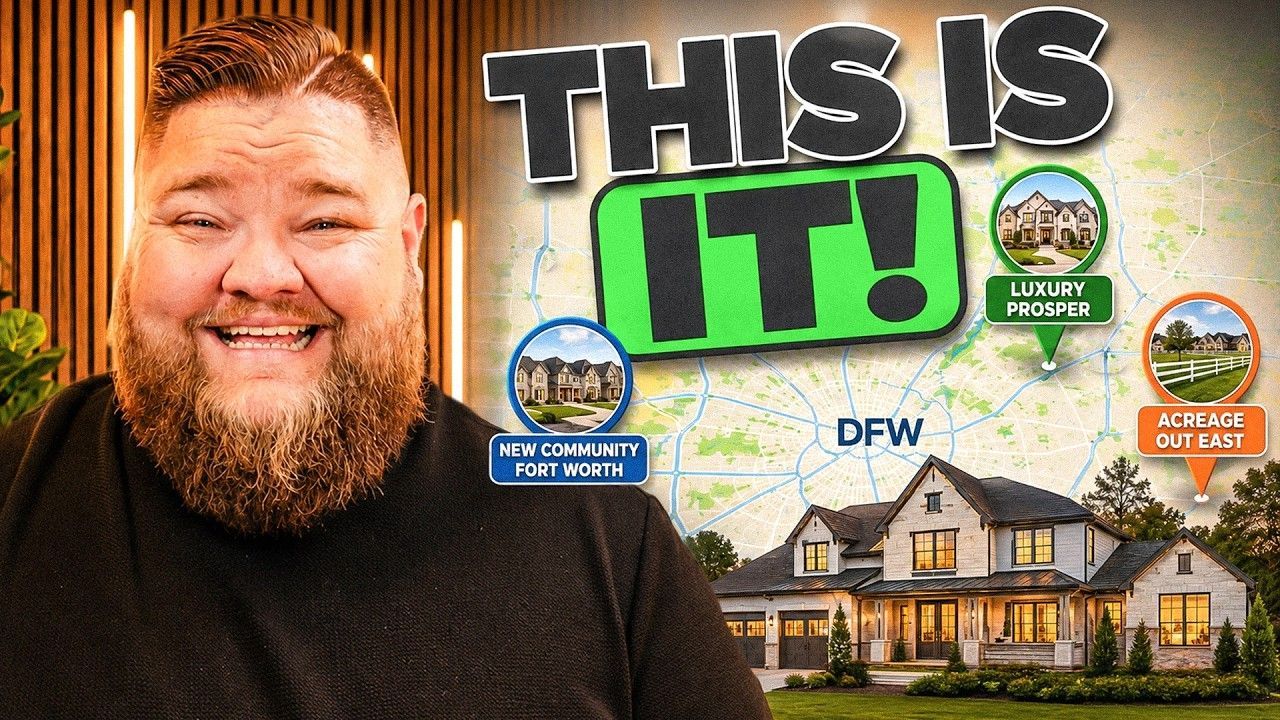
If you're relocating to DFW or looking at new construction homes in Rockwall, Forney, Fort Worth, or Little Elm, I'd love to help you figure out what actually makes sense for your budget and your life. Not what you qualify for. What you can afford and what you're comfortable with. Those are three different things. I work with lenders who will walk you through the real math, not just the payment, so you can make a decision that protects you long after closing day.
Call or text me at 469-707-9077 or book a FREE consultation here and let's talk through your situation, look at what builders are offering right now, and figure out if building or buying inventory is the right move for you. I'm here to help you get ahead, not just get approved.
FAQ
Should I put 20% down or pay off my credit cards first?
Pay off your credit cards first. The same $10,000 applied to a mortgage might save you $60 a month. That same $10,000 in consumer debt is costing you $500 a month at 25 to 29% interest. Consumer debt first, then worry about your down payment.
Do buy now pay later apps like Klarna and Affirm affect my mortgage approval?
Yes. They show up on your bank statements as recurring expenses, and lenders count them as undisclosed debt. Until they're paid in full, they're a debt. If you're planning to buy a home, pay them off before you apply for a mortgage.
Is now a good time to buy a house in DFW or should I wait for rates to drop?
Today is always the worst case scenario. You can refinance later and save money later, but you can't change the sales price. When rates drop, more buyers come back to the market and create competition, which drives prices up. If you can afford it now, not by the skin of your teeth, buy now and refinance later.
Should I build a new construction home or buy an inventory home in DFW?
If you have flexibility in affordability, income, and debt, and you can wait six months, building is great. If you need to move now and want to see exactly what you're getting, buy inventory. Move-in-ready homes are curated from the most popular choices, and you can paint the walls and make it your own without the wait.
How do I know if I'm buying too much house?
Do the math after your take-home pay, not your gross income. Everything mortgage lenders do is based on gross, but you live on your net. If you're buying a house and you've got to re-shop for furniture or you can't handle one bad month, you're buying too much house. What you can qualify for and what you can afford are two different things.
What's the best financial advice for first-time home buyers?
Pay yourself first. Give every dollar a job. Celebrate the little wins. Get your consumer debt under control before you buy a house. And understand that today is always the worst case scenario, so if it makes sense now, buy now and refinance later when rates improve.

Zak Schmidt
From in-depth property tours and builder reviews to practical how-to guides and community insights, I make navigating the real estate process easy and enjoyable.