Is Celina TX a Good Place to Live? What Homebuyers Need to Know
Few cities in North Texas have generated as much buzz or as many Google searches as Celina. Once a quiet farming town north of Frisco and Prosper, Celina has transformed into one of the fastest-growing cities in the entire United States, with new master-planned communities, builder inventory, and rooftops appearing at a pace few other DFW suburbs can match. If you're weighing a move to Celina, TX, the question isn't really "is it growing?" that part is obvious. The real question is whether it's the right kind of growing city for you.
This guide takes a closer, evidence-based look at what actually makes Celina appealing, who tends to be happiest living there, and the tradeoffs that come with buying into one of the country's fastest-growing markets.
What Makes Celina Appealing
Celina's appeal comes down to a combination of space, newness, and timing that's increasingly hard to find closer to Dallas.
New construction at scale. Because so much of Celina is still being built out, buyers get access to a huge selection of brand-new homes like modern floor plans, energy-efficient construction, and builder warranties rather than competing over decades-old resale inventory. Builders continue to release new phases across the city's master-planned communities on a near-constant basis.
More home for the money than nearby cities. New construction in Celina typically runs $50,000 to $100,000 below comparable homes in Frisco or Prosper, which is often the deciding factor for buyers who want the same general lifestyle and demographic profile without the same price tag.
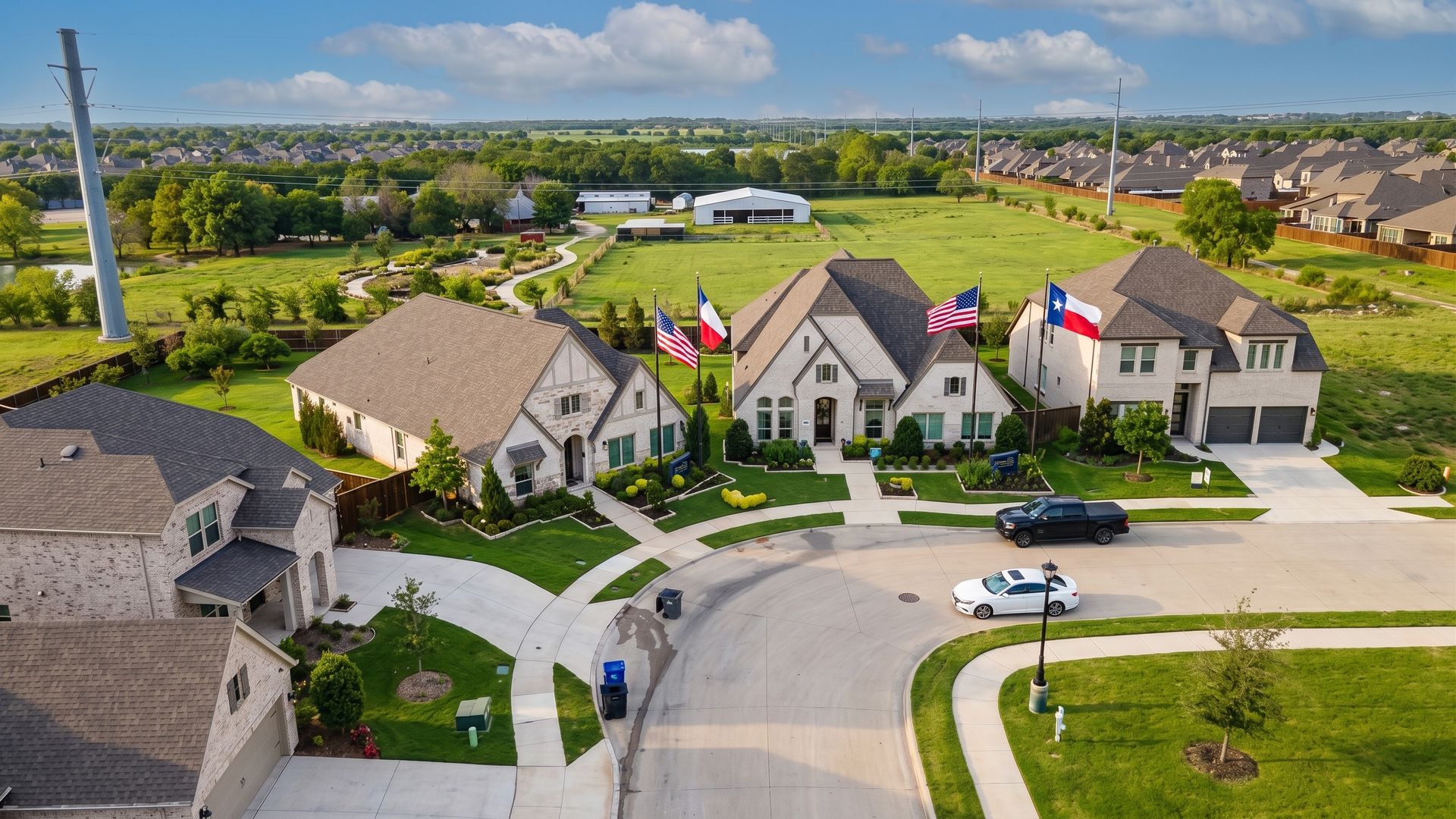
Amenity-rich master-planned communities. Neighborhoods like Light Farms, Mustang Lakes, and Cambridge Crossing are designed around trails, lakes, resort-style pools, fitness centers, and year-round community events, the kind of built-in social infrastructure that appeals strongly to young families.
A genuinely walkable downtown. Unlike some newer North Texas suburbs whose "downtown" is really just a retail strip, historic Downtown Celina has held onto real small-town character, with local shops and restaurants that residents frequently cite as one of the city's best features.
Strong household income and low unemployment. Census data consistently shows Celina households earning well above both the state and national median, with median household income figures in various recent estimates ranging from roughly $155,000 to $170,000 reflecting a workforce heavily concentrated in professional, technical, and finance-related roles.
Who Tends to Enjoy Living There
Not every buyer ends up happy in Celina, but a clear pattern shows up among the people who do:
- Growing families with young kids, who prioritize space, new construction, and neighborhood amenities over walkable retail and short commutes.
- Remote and hybrid workers. Celina has an unusually high share of residents who work primarily from home (well above the national average) which makes sense given how much the daily commute shapes satisfaction here. For this group, the distance from downtown Dallas is largely irrelevant.
- Buyers whose jobs are already in North Collin County like Frisco, Prosper, McKinney, or the growing Celina/Prosper corridor itself rather than downtown Dallas or Fort Worth.
- People who want to get in early on a city's growth trajectory, both financially and socially, and don't mind years of ongoing construction and shifting infrastructure in exchange for that early-mover position.
- Buyers with a genuine budget preference for new construction over resale, who would rather have the latest floor plan and builder warranty than an established, mature neighborhood.
The Biggest Tradeoffs
WBeing one of the fastest-growing cities in the country comes with real friction, and it's worth understanding this before you tour a single model home.
The commute is longer than it looks on a map. While the average commute across all Celina residents runs a little over half an hour, that number is pulled down heavily by the large share of people working from home or working locally. For residents actually commuting into downtown Dallas, the real drive time is typically 45 to 65 minutes each way on a good day and longer once traffic is added in.
There is no public transit. No DART, no DCTA, nothing. Celina is entirely car-dependent, which means every errand, every school drop-off, and every commute runs through a personal vehicle. Buyers moving from a city with any kind of transit option often underestimate how much this changes daily life.
Property taxes and MUD fees are meaningfully higher than the advertised rate. City and school tax rates in Celina typically start around a 2% baseline before other assessments are added, and many of the master-planned communities driving the city's growth sit inside Municipal Utility Districts (MUDs) that tack on another $0.25 to $0.50 per $100 of assessed value. On a home valued around $500,000, that MUD line item alone can add $1,300 to $2,500 or more per year, a cost that isn't always obvious from a builder's initial pricing sheet.
School zoning doesn't always match the city name. A meaningful number of southern Celina neighborhoods are actually zoned into Prosper ISD rather than Celina ISD, and boundaries continue to shift as both districts grow and add campuses. Celina ISD itself is still relatively young, which means ongoing bond packages and new construction both of which tend to push local tax rates up over time.
Retail and dining infrastructure still lags behind the rooftops. Plenty of new residents love the quieter, less-congested feel when they first move in, then find themselves regularly driving to Frisco or McKinney for restaurants, shopping, and services that haven't caught up to Celina's population yet.
Growth itself is the tradeoff. Road construction, new-phase development, and shifting traffic patterns aren't a temporary inconvenience in Celina with the city's build-out still well under half complete by most local estimates, these are likely to be part of daily life for years to come.
Why Celina Has Become Popular With Homebuyers
Celina's rise isn't accidental, it's the natural next step in a growth pattern that's been marching north through DFW for two decades. As Frisco and Plano matured into largely built-out, increasingly expensive cities, homebuilders and buyers alike pushed further north in search of land, and Celina had both the available acreage and the highway access (via the Dallas North Tollway extension and Preston Road) to absorb that demand.
The result has been staggering growth by almost any measure: Celina has been recognized as the fastest-growing city in the country by population, with local estimates showing the population climbing well past its 2020 census figures at a double-digit annual growth rate. New home sales in the area have surged, even as home prices have actually softened somewhat over the past year as builder supply has caught up with demand creating a market that, unusually for Celina, currently favors buyers more than it has in recent years.
For homebuyers specifically, that combination like new construction, family-oriented amenities, strong household incomes among current residents, and a market that's cooled just enough to create real negotiating leverage has made Celina one of the most searched suburbs in North Texas for anyone planning a move to the Dallas area in 2026.
Quick Overview: Lifestyle, Housing, Location, and Growth
Lifestyle: Family-oriented, amenity-driven, and almost entirely car-dependent. Life in Celina centers around neighborhood pools, trails, and community events rather than walkable retail or nightlife, with a small, charming downtown as the main exception.
Housing: A wide range, from entry-level new construction in the $300,000s to luxury estates well over $1 million, with median sale prices across various 2026 data sources landing roughly between $496,000 and $567,000. Most homes are new or recently built, concentrated in large master-planned communities.
Location: Northern Collin County, just beyond Prosper and Frisco, roughly 40-plus miles north of downtown Dallas. Strong north-south access via the Dallas North Tollway and Preston Road; east-west connectivity is still catching up to the pace of development.
Growth: Among the fastest-growing cities in the United States, with population estimates showing dramatic year-over-year increases and a majority of the city's eventual footprint still to be built out. That growth is the engine behind everything that makes Celina appealing — and behind nearly every tradeoff on this list.
Thinking About Moving to Celina, TX?
Celina offers a rare combination in North Texas right now: new construction at scale, family-friendly amenities, and a market that's finally giving buyers some negotiating room after years of rapid appreciation. But the buyers who end up happiest are the ones who go in with a clear picture of the commute, the tax structure, and the pace of ongoing growth not just the model home tour. If you're seriously considering a move to Celina, TX and want a straight, local read on tax districts, school zoning, and which communities actually fit what you're looking for, reach out to me, Zak Schmidt at 469-707-9077.

Zak Schmidt
From in-depth property tours and builder reviews to practical how-to guides and community insights, I make navigating the real estate process easy and enjoyable.