New Construction Communities in DFW: The Truth About Master Planned Living
When people start looking at new construction communities in DFW, the phrase “master planned community” comes up fast. It sounds great, and honestly, it can be great. But it is not automatically the right answer for everybody.
A master planned community can give you pools, parks, trails, event spaces, schools, shopping, and a real sense of place. It can also bring higher HOA dues, added taxes, ongoing construction, tighter rules, and that cookie cutter feeling some people just do not want.
The key is understanding what you are actually buying into. You are not just picking a house. You are choosing the lifestyle, the costs, the rules, and the long-term plan surrounding that house.
Key Takeaways
- Master planned communities are large, phased developments built around a long-term vision for homes, amenities, and often schools or commercial space.
- Strong amenities and community recognition can be valuable, but HOA dues, MUD or PID taxes, and construction timelines must be part of the budget.
- The best fit depends on whether you will actually use the amenities and are comfortable with the HOA rules, density, and ongoing development.
Table of Contents
- What Makes A DFW Community Master Planned?
- What To Expect From New Construction Communities In DFW
- Benefits Of Master-Planned Communities In DFW
- Downsides Of New Construction Communities In DFW
- HOA Rules In Master-Planned Communities In DFW
- HOA Costs, MUDs And PIDs In DFW
- Choosing The Right DFW Community For You
- Questions To Ask Before Buying In DFW
What Makes A DFW Community Master Planned?
Not every new neighborhood is a master planned development. A standard new-build neighborhood may have a few phases, an HOA, a pool, and maybe a basketball court. That is a neighborhood. It is not necessarily a master planned community.
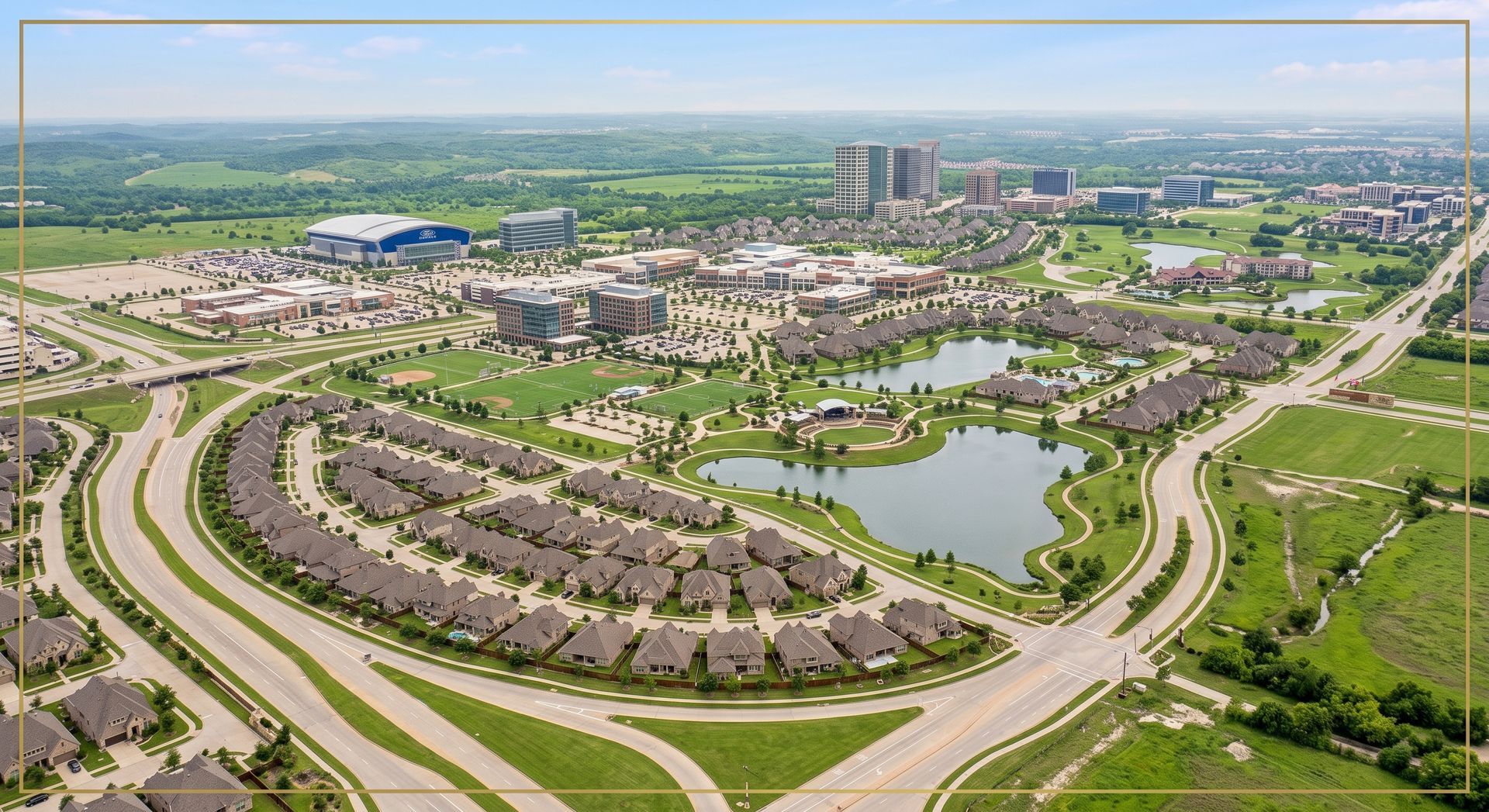
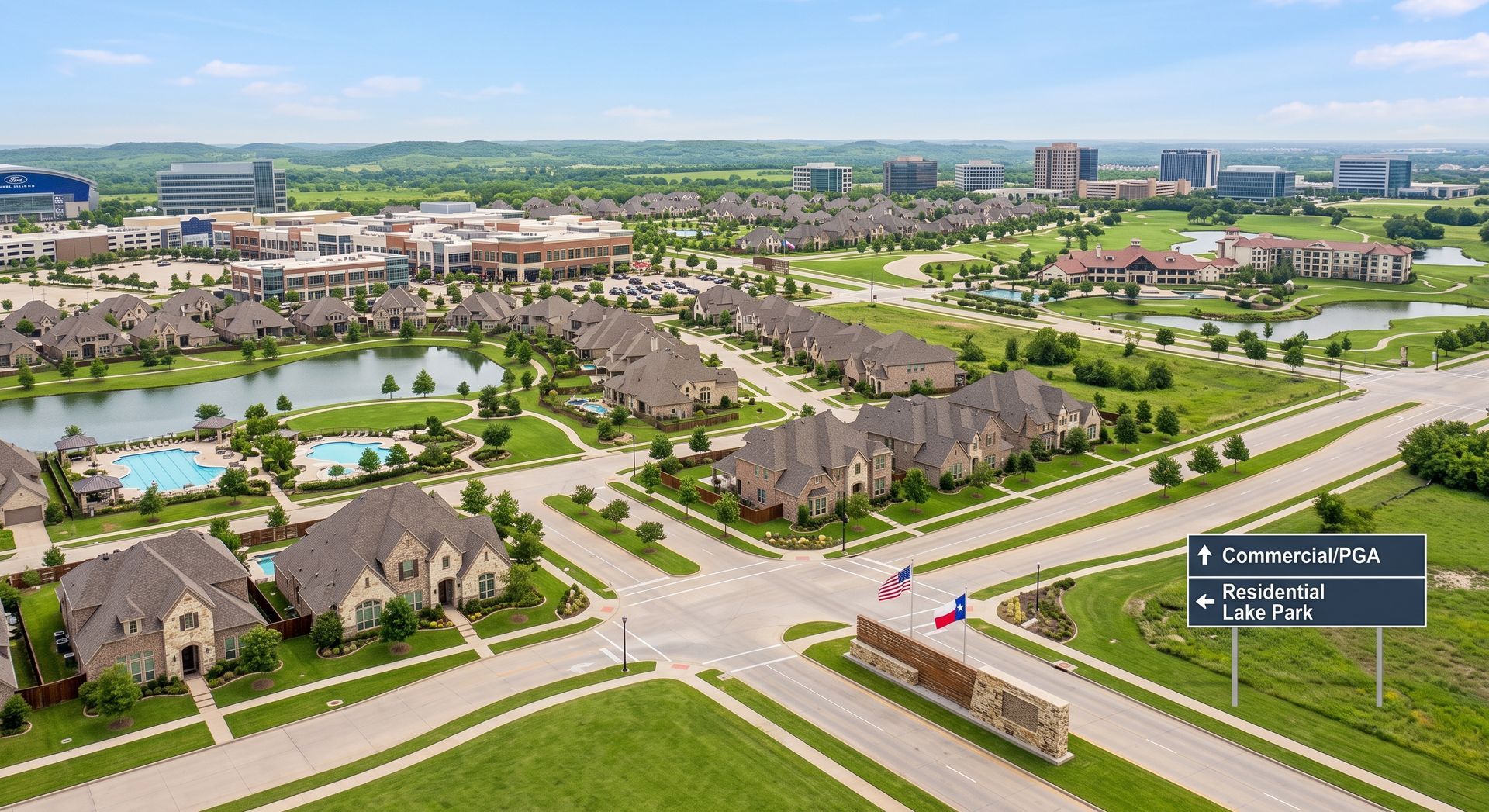
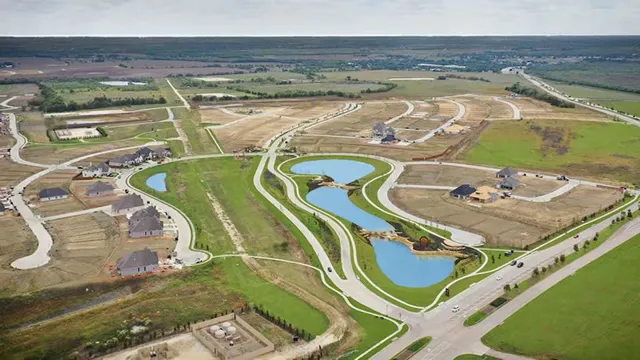
Master-planned communities in DFW are typically much bigger, more intentional, and built on a much longer timeline. Think about a development that could take 10 to 15 years to fully build out, with multiple builders, home styles, price points, amenity centers, parks, trails, green space, and sometimes even retail or schools built into the long-term vision.
The biggest difference is the plan. In a true master planned development, the developer generally has a plan for every portion of the land. There is a roadmap for where homes, parks, schools, community centers, commercial space, trails, and future phases will go.
Examples of the type of large-scale communities people recognize around North Texas include Devonshire in Forney , Woodcreek in Fate , M3 Ranch in Mansfield , Craig Ranch in McKinney , Solterra in Mesquite , Windsong Ranch in Prosper , Painted Tree in McKinney, and Mantua farther north near Van Alstyne.
That does not mean every one of these communities will be the best fit for every buyer. It just means they fit the general idea of a large, phased development where the developer is building more than a collection of homes.
What To Expect From New Construction Communities In DFW
When you look at larger new construction communities in DFW, expect a scale that goes well beyond a single neighborhood pool.
Depending on the development, amenities may include:
- Multiple pools and amenity centers
- Walking and hiking trails
- Dog parks and playgrounds
- Greenbelts, open space, fishing ponds, and stocked ponds
- Pickleball, tennis, basketball, and other sports courts
- Splash pads and event lawns
- Fitness spaces or community gyms
- Schools located inside or near the development
- Townhomes, single-family homes, and multiple housing styles
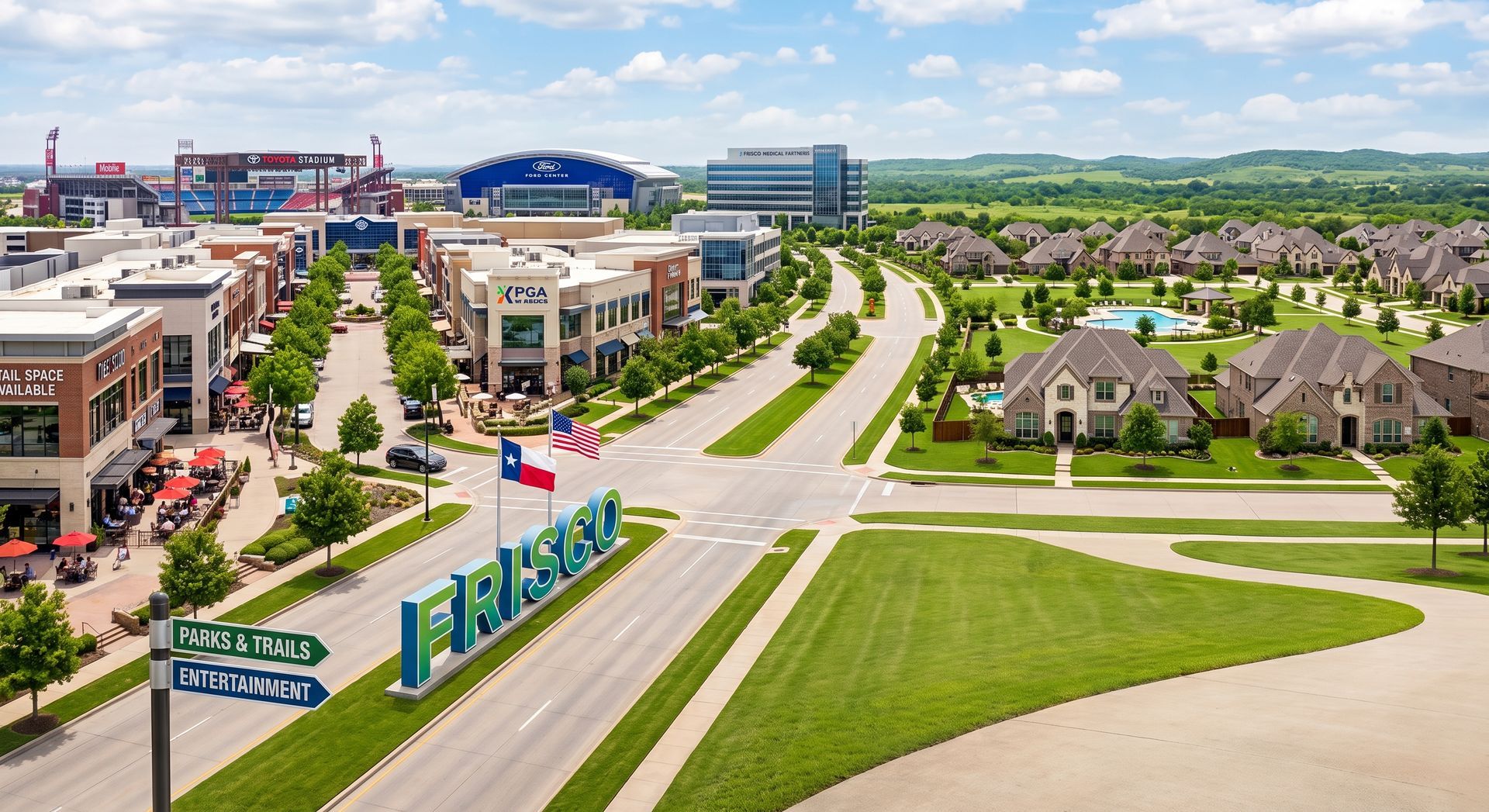
- Retail, restaurants, grocery stores, and other mixed-use spaces
Some communities go even further. Windsong Ranch is widely known for its lagoon-style amenity. Solterra has promoted a treehouse feature. Other communities build around lakes, parks, resort-style pools, or commercial districts designed to make daily life feel more connected.
That is the appeal of master-planned communities in DFW. You are buying into a neighborhood that is trying to create an experience, not just a street with houses on it.
Benefits Of Master-Planned Communities In DFW
A Long-Term Vision
One major upside of new construction communities in DFW with a true master plan is that there is usually a clear vision for what the community will become. You can look at the map, understand future phases, and see where roads, trails, parks, and amenities are planned.
That matters because a home purchase is a long-term decision. If you are buying early in a development that has another six, seven, eight, or even 10 phases coming, the surrounding infrastructure may continue improving as the community fills in.
More Choices At Different Price Points
Another thing that makes new construction communities in DFW attractive is the variety of price points within one development. In Devonshire, for example, homes can range from the mid to high $300,000s into the $600,000s and $700,000s. Solterra has been planned with homes beginning in the mid $300,000s and $400,000s and extending into higher price tiers.
That range can be a real positive. A community can offer first-time buyers, move-up buyers, and buyers looking for a larger home the opportunity to live in the same general area, often with access to the same amenities.
Of course, price point variety does not mean every section feels the same. Builders, lot sizes, home elevations, and HOA structures can vary from one section to another. Always look at the specific village or phase, not just the name on the entry monument.
Amenities That Support Real Life
If you are actually going to use the pool, trails, playgrounds, parks, fitness center, or community events, those features can make a major difference in your day-to-day experience. The value is not only in having an amenity listed on a brochure. It is in whether it becomes part of your normal routine.
A family that spends weekends at the splash pad or walks the trails every evening may get a lot out of a master planned community. Somebody who travels constantly, does not use amenities, and prefers a quieter setup may be better off in a smaller neighborhood with a lower HOA bill.
Potential Value And Community Recognition
I generally see master planned communities in DFW as a solid long-term consideration because people desire the amenities, common spaces, location, and identity these developments can create. That demand can support resale value over time.
There is also a branding effect. When a development becomes well known and has a strong reputation, people recognize the name. Windsong Ranch is a great example in North Texas. It has become a community that many buyers immediately understand and associate with a higher-end amenity-driven lifestyle.
A successful community name does not guarantee appreciation, and real estate is never that simple. But a well-executed development with desirable amenities, quality maintenance, and a strong identity can help homes retain appeal as the area grows.

Downsides Of New Construction Communities In DFW
Now for the stuff that needs to be said out loud. Master-planned communities are not all upside. You need to be honest about the tradeoffs before falling in love with the pool, clubhouse, or model home.
Density And The Cookie Cutter Feel
Some new construction communities in DFW can feel very planned, and I do not always mean that as a compliment. There are developments where the streets feel like a giant grid, homes feel tightly packed, and the overall layout can feel a little too uniform.
Builders and developers have gotten better about incorporating winding roads, sidewalks, parks, trees, greenbelts, and better use of open space. The best developments find ways to make density feel intentional instead of cramped.
Still, this is personal. Some people drive through a master planned community and love the consistency. Others immediately say, “This is too cookie cutter for me.” Neither answer is wrong. You need to drive through it, see the lots, see the streets, and get a feel for how it lands with you.
Construction Can Last For Years
If you buy early in master-planned communities in DFW, you may benefit from the long-term growth. You may also live around construction for a while. That can mean builder traffic, unfinished roads, nearby lots being built, and amenities that are planned but not yet complete.
Ask exactly what is built today, what is under construction, and what is simply proposed. Also ask where the next phases will be located relative to the lot you are considering. The development map matters.
HOA Rules In Master-Planned Communities In DFW
HOAs are one of those things people either have strong opinions about or have never dealt with before. In larger master planned communities in DFW, you should expect the HOA to be more structured and, in many cases, stricter.
The HOA may have rules around:
- Exterior paint colors
- Landscaping and approved tree types
- Fence styles and exterior modifications
- Parking and visible trash cans
- Yard maintenance and property appearance
- Use of common areas and amenity facilities
That can be good and bad. The good is that there are checks and balances designed to protect the appearance and standard of the neighborhood. The bad is that those same rules can feel restrictive when you want to make a change to your home or simply leave the trash can out longer than you should.
Early in the life of a new development, the developer often controls most of the HOA decision-making power. As more homes are sold and the community matures, residents usually gain more influence over how the association works.
There is also typically a management company involved. That company handles the books, maintains facilities, coordinates events, keeps amenities operational, and helps enforce the rules. Ideally, it makes everything run smoothly. Either way, it is part of the structure you are buying into.
|
HOA Costs, MUDs And PIDs In DFW
Here is the reality: all those pools, trails, parks, landscaping, and amenity centers cost money. Somebody has to pay for them, and that somebody is the homeowner.
HOA dues in master planned communities in DFW can vary substantially. I have seen annual HOA costs from roughly $700 to $1,500 or even $2,000, depending on the community and what is included. That figure needs to be part of the full budget, not an afterthought after you fall in love with a home.
Your HOA payment can also matter for lending qualification. It is another monthly or annual obligation associated with the property, so make sure it is factored into the conversation early.
Then there are MUDs and PIDs.
MUD And PID Basics
A MUD is a Municipal Utility District, and a PID is a Public Improvement District. They are different structures, but the practical takeaway is similar: they help pay for development-related infrastructure such as roads, water, utilities, and other improvements.
In other words, the developer builds out infrastructure, and the cost is commonly passed along through the tax structure tied to the property. This can affect the total tax rate in the community.
Property tax rates in North Texas can range roughly from 1.9% to 3.3%, depending on the community. In many new construction communities in DFW, a MUD or PID may be part of why a rate is higher. It might move a tax rate from 2.2% to 2.3% or 2.4%, for example.
Do not treat this as a small detail. Property taxes, HOA dues, insurance, and financing all work together to determine your actual monthly payment. The purchase price alone does not tell the whole story.
Choosing The Right DFW Community For You
The right answer comes down to whether you will use what you are paying for.
A master planned community may be a great fit if you want:
- Resort-style pools, parks, trails, and activity spaces
- A larger community with a defined identity and long-term vision
- Multiple housing choices and price points in one area
- Community events, schools, or future retail nearby
- An HOA structure that helps keep the neighborhood consistent
A smaller new-build neighborhood may make more sense if you want:
- A lower HOA cost
- Fewer rules and less oversight
- Less density or a less developed environment
- No need for large amenity centers
- A simpler neighborhood experience without paying for extras you will not use
The biggest mistake is paying for an entire amenity package you do not care about. If you know you will never use the pool, gym, trails, dog park, or event center, there may be no reason to stretch your budget for a community built around those things.
On the flip side, if that lifestyle is exactly what you want, those amenities can be worth every bit of the added cost.
Questions To Ask Before Buying In DFW
Before choosing between new construction communities in DFW, get specific. Do not stop at the model home or the sales brochure.
- What amenities are complete today, and what is planned for later?
- How many phases are left, and how long is the projected build-out?
- Where will future construction occur in relation to this home?
- What are the HOA dues, and what do they cover?
- Are there MUD or PID taxes, and how do they affect the tax rate?
- What builders are in the community, and how do the sections differ?
- What restrictions apply to exterior changes, landscaping, parking, and fencing?
- Will I honestly use the amenities enough to justify the extra cost?
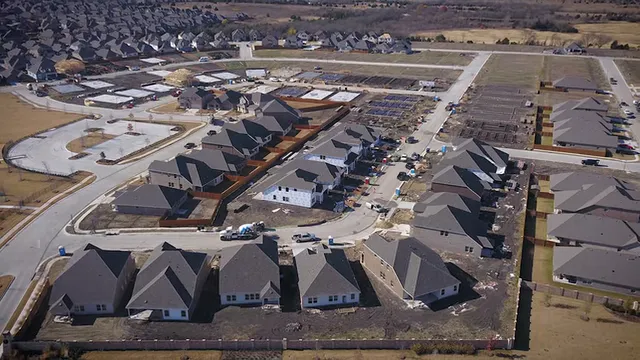
Drive the community. Drive it during the day. Drive it in the evening. Look at lot spacing, traffic flow, nearby construction, street layouts, parks, and the condition of common areas. A community can look very different when you get beyond the entrance and the model homes.
New construction communities in DFW offer a lot of opportunity, but there is no universal best choice. The best one is the community that fits your budget, your lifestyle, your timeline, and the way you actually want to live.
FAQs About New Construction Communities In DFW
What is the difference between a neighborhood and a master planned community?
A typical neighborhood may have a few phases, an HOA, and limited amenities. A master planned community is generally much larger, built over many years, and designed with a comprehensive plan for housing, roads, parks, amenity centers, trails, schools, and sometimes retail.
Are master planned communities in DFW a good investment?
They can be a solid long-term option because desirable amenities, common spaces, and a recognized community identity can support demand. Results still depend on the location, builder quality, market conditions, tax structure, and the specific home you buy.
Why are HOA fees higher in master planned communities?
HOA fees help maintain shared amenities and common areas such as pools, parks, landscaping, trails, courts, activity centers, and community facilities. More amenities usually means higher ongoing operating costs.
What are MUD and PID taxes in North Texas?
A Municipal Utility District and a Public Improvement District are structures that can help fund development infrastructure, including roads, utilities, and related improvements. They can increase the property tax rate, so they should be reviewed before buying.
Not sure if a master planned community is the right fit for your lifestyle and budget? Call or text me at 469-707-9077 or book a FREE consultation here to talk through your options and find a new construction community in DFW that truly fits your needs.

Zak Schmidt
From in-depth property tours and builder reviews to practical how-to guides and community insights, I make navigating the real estate process easy and enjoyable.