buying-dr-horton-home-dfw
I've built two D.R. Horton homes myself, one in Phoenix, one here in DFW, so I'm not guessing when I say this: if you're considering Horton, you need to walk in with your eyes open. They're the biggest homebuilder in America for a reason, and that reason cuts both ways. You'll find the lowest price points in the Metroplex, homes starting in the $240,000s when most builders won't touch anything under $300,000 anymore. You'll also find a production machine that closed 82,930 homes in 2022 alone, which means speed, volume, and a very specific kind of buyer experience.
This is not a takedown. It's a reality check. D.R. Horton has a place in the DFW market, especially if you're a first-time buyer trying to get into the game or you need a home fast in a tight inventory cycle. But if you walk into one of their Express communities expecting customization, white-glove service, or a builder who treats your home like a craft project, you're setting yourself up for disappointment. I'm going to walk you through what it's really like to buy from Horton, the product lines, the trade-offs, the warranty headaches, the investor controversy, and the one non-negotiable I tell every client before they close.
If you're planning to build in DFW and Horton is on your list, this is the conversation most agents skip. Let's get into it.
Table of Contents
- D.R. Horton's Product Lines: Traditions, Express, Emerald, and Freedom
- What You Get (and Don't Get) with a Volume Production Builder
- The Investor Paradox: Why Horton Won't Sell to You but Will Sell 1,500 Homes to Wall Street
- Warranty, Culture, and Quality Control Issues
- Should You Buy a D.R. Horton Home in DFW?
- Conclusion
D.R. Horton's Product Lines: Traditions, Express, Emerald, and Freedom
D.R. Horton doesn't build one kind of home. They build four distinct product lines, and understanding which one you're looking at is the first step to setting the right expectations.
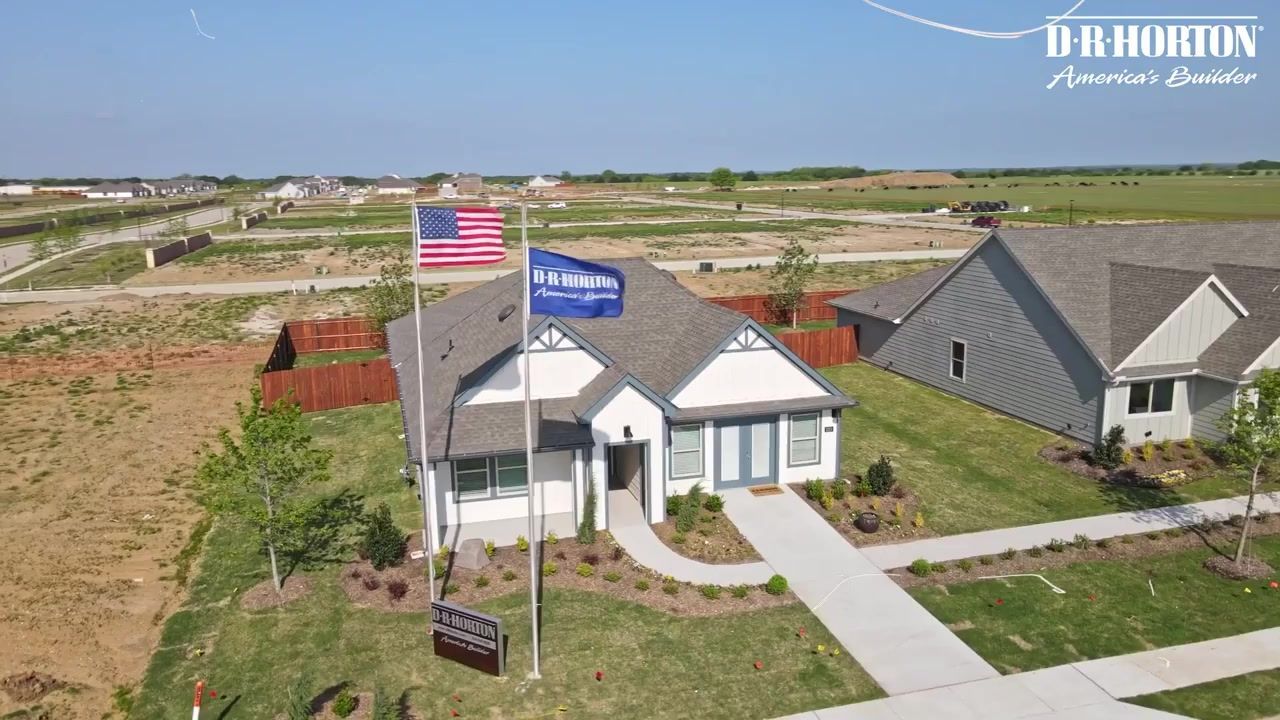
Traditions is their base-level product. It's not flashy, but it's functional and priced to move. Express is what you see everywhere in DFW right now, mass-production communities aimed squarely at first-time homebuyers. The tagline is "new isn't impossible," and they mean it. These homes go up fast, floor plans are limited, and every house on the block will have the same cabinets, countertops, flooring, and paint. You're not picking finishes. You're picking a lot with a floor plan already assigned to it. That's it. Emerald is their higher-end line under the D.R. Horton brand, though I don't see as much of it in the DFW suburbs. Freedom is their 55-and-older line, which is their polite way of saying age-restricted communities.
The one we built here in DFW was an Express home. The one we bought in Phoenix was closer to their higher-end product, a three-story townhome-style condo. The Phoenix home held up better, but it also cost more and had more finish options. The Express home we built? It's fine. It's held up decently. But you have to know what you're buying. This is not a semi-custom builder. This is not even a production builder with an upgrade studio. This is a conveyor belt, and you're getting what comes off the line.
What You Get (and Don't Get) with a Volume Production Builder
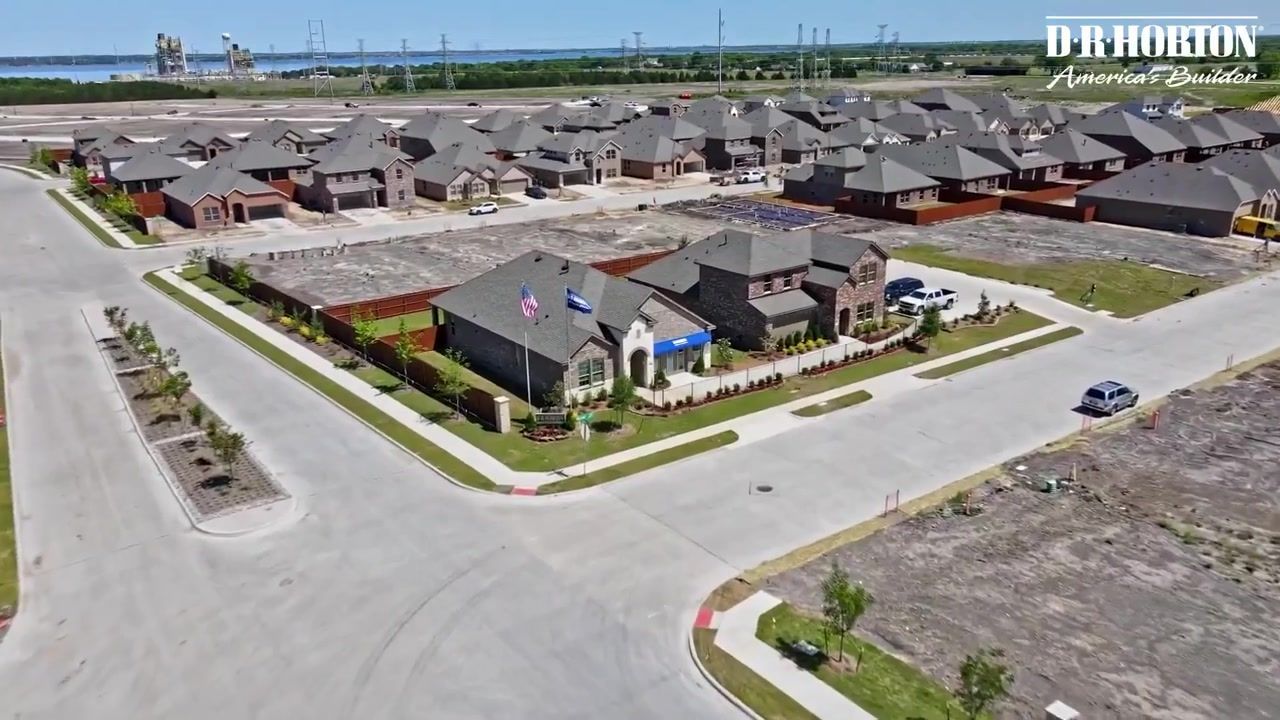
Let me put this bluntly: D.R. Horton closed 82,930 homes in 2022. The next closest builder, Lennar, closed 68,000. Nobody is pumping out volume like Horton, and it's not even close. That volume is both the selling point and the warning label.
When you're building or selling 90,000 homes a year, you are optimizing for speed and cost, not customization or customer experience. I've had clients walk into Express communities expecting to change cabinet colors, add a different backsplash, or move a wall. The answer is always no. Zero customization. You get the floor plan, the lot, and the finish package that every other house in that phase is getting. If you want to make changes, you're looking at the wrong builder.
The upside? Price. I'm looking at Horton's DFW inventory right now, and I'm seeing homes starting at $244,000, $258,000, $288,000, $334,000. We're not seeing tons of builders starting with numbers in the $240,000s anymore. If getting into the market is your priority and you understand the trade-offs, Horton can get you there. But manage your expectations. I don't want to call it dollar-menu construction, but it kind of is. You don't expect to find steak on the dollar menu, and if you do find steak on the dollar menu, you don't order it. You go to get the burrito and a Dr Pepper. Same logic applies here.
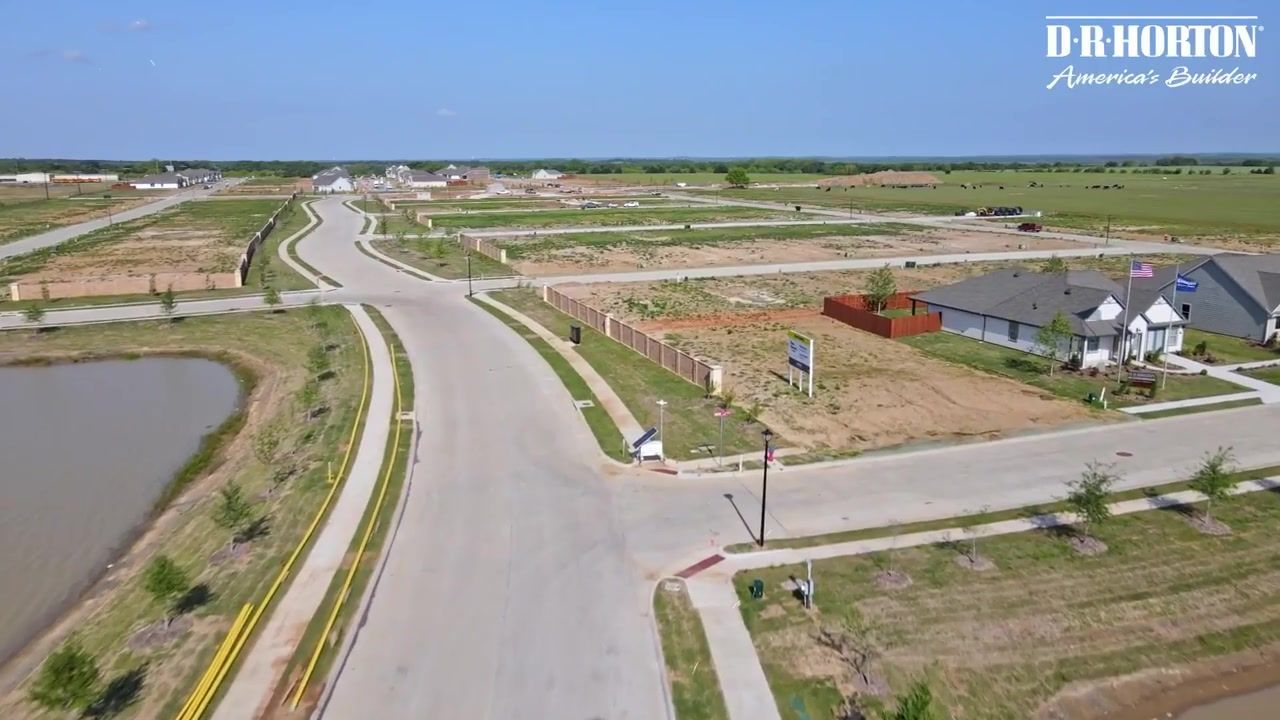
The other thing I notice when I look at Horton communities: they don't invite competition. A lot of master-planned developments in DFW will have four or five builders, Highland, Perry, Grand, Trophy, HistoryMaker, Manor, all competing in the same neighborhood. Good competition breeds better products. When I see a Horton development, it's usually just Horton. They're the land developer, the builder, and the only game in town. That eliminates competition, which means there's less pressure to improve quality or customer service. It's just the way their business model works.
The Investor Paradox: Why Horton Won't Sell to You but Will Sell 1,500 Homes to Wall Street
Here's where it gets weird. If you own another property and you want to turn it into a rental while you buy a new Horton home, they will cancel your contract. I've heard this from multiple sales counselors. Horton's official policy is that they do not sell to investors. If you come in with another home on your balance sheet, they classify you as an investor and refuse to write the contract. Even if you're planning to live in the new home and legitimately want to keep your current house as a rental, they won't do it.
But here's the kicker: in 2022, a New York investment firm acquired homes from D.R. Horton in a $1.5 billion deal. The purchase included a combination of completed and uncompleted homes. So they won't sell one house to you if you own another property, but they'll sell 1,500 homes in bulk to a Wall Street firm. Make it make sense.
It gets better. D.R. Horton has invested over $1 billion in the last three years into their single-family rental arm. In 2022, they closed 518 build-to-rent homes. That number is going to explode. I'm seeing more and more Horton communities in DFW that are being built specifically for rent, not for sale. Warren Buffett even said D.R. Horton is his favorite homebuilder, and he now owns roughly 5.7 million shares. Why? Because they were one of the first big builders to jump on the build-to-rent train, and it's incredibly profitable.
So if you're buying in a Horton Express community, expect that in three to five years, a good chunk of the homes around you will be rentals. People buy these homes to get into the market, then they move up and rent them out, or investors buy them in bulk because the price points make them easy to rent. I'm not saying that's good or bad. I'm saying it's a thing. Just know that the longer you live in one of these neighborhoods, the more rental homes you'll probably have around you.
Warranty, Culture, and Quality Control Issues
I'm not going to sugarcoat this. If you Google "D.R. Horton problems," you will find hundreds of complaints, Facebook groups, TikTok videos, and news articles. There was a viral video this summer of a guy showing stone on the front of his Horton home that was clearly installed wrong. The Dallas Morning News reported that Horton struck a $16.1 million settlement over faulty construction. These stories pop up more frequently than I'd like to see.
I've also talked to several former Horton sales reps who now work for other builders or have left the industry. The sentiment I hear over and over: "The money was great, but the culture was toxic." They hated the way they had to interact with customers. They hated telling buyers, "No, we're not making changes. It is what it is." One rep told me they were selling 10 to 15 homes a month, making serious commissions, but the culture was draining and it played out in how homeowners were treated.
Warranty service is another common complaint. I've had clients, and I've experienced it myself, where getting Horton to come back and fix something post-close is like pulling teeth. The financing teams can be difficult. The construction timelines can slip. All of this is indicative of a massive builder trying to close 90,000 homes a year. The system is built for volume, not for hand-holding.
Does that mean you should run far, far away? Not necessarily. But it does mean you need to go in with realistic expectations. If you're buying an Express home, you're buying the cheapest product from the biggest builder in America. You're not buying a semi-custom home with a dedicated project manager. You're buying speed and price, and you're trading off customization and service.
Should You Buy a D.R. Horton Home in DFW?
Here's my honest take: if D.R. Horton gets you into the market and you understand what you're buying, it's not a bad move. If you're a first-time buyer, you're priced out of other builders, and you need a home now, Horton can make that happen. But you have to walk in knowing this is a production-line product. Lower your expectations. Don't expect grand, don't expect elegant, don't expect customization. Expect a home that will get you into the game.
I also think there are better options in DFW if you can stretch your budget even slightly. Builders like Highland, HistoryMaker, and even some of the mid-tier production builders offer more customization, better customer service, and communities with more competition (which drives up quality). But if Horton is the only builder that fits your budget, just make sure you're going in with your eyes open.
And here's the one non-negotiable I tell every client, no matter who the builder is: get the home inspected before you close. I don't care if it's D.R. Horton, Highland, Pacesetter, Trophy, or a custom builder. Get the home inspected. New construction does not mean perfect construction. An inspection will catch issues before they become your problem, and it gives you leverage to get things fixed before you hand over the keys.
If you're considering a Horton home, or any new construction home in DFW, let's have a conversation. I've been through this process twice with Horton, and I've helped dozens of clients navigate new construction with builders across the Metroplex. Call or text me at 469-707-9077 or book a FREE consultation here. Let's talk about whether Horton is the right fit for you, or if there's a better option that still fits your budget and timeline.
Conclusion
D.R. Horton is the biggest homebuilder in America, and they're everywhere in DFW. They offer the lowest price points, the fastest timelines, and zero customization. They won't sell to you if you own another property, but they'll sell 1,500 homes to Wall Street in a single deal. Their Express communities are mass-production machines, and their warranty service has a reputation for being difficult. But if you need to get into the market and you understand what you're buying, they can make it happen.
I'm not telling you to avoid Horton. I'm telling you to go in with realistic expectations. If you want customization, white-glove service, and a builder who treats your home like a craft project, look elsewhere. If you want the cheapest entry point into homeownership in DFW and you're okay with the trade-offs, Horton might be your best bet. Just get the home inspected before you close, no matter what.
If I can help you find the right new construction home, whether it's Horton or someone else, reach out. Let's talk about your budget, your timeline, and what you actually need in a home. I'd love to help.
FAQ
Is D.R. Horton a good builder in DFW?
D.R. Horton is the biggest builder in America, and they offer the lowest price points in DFW. They're a good option if you're a first-time buyer trying to get into the market and you understand you're buying a production-line product with zero customization. They're not a good option if you want a semi-custom experience or expect white-glove customer service.
What is the D.R. Horton Express line?
The Express line is D.R. Horton's mass-production product aimed at first-time buyers. Every home in an Express community has the same cabinets, countertops, flooring, and paint. You pick a lot and a floor plan, and that's it. No customization. These homes go up fast and are priced to move.
Does D.R. Horton sell to investors?
Officially, no. D.R. Horton will cancel your contract if they find out you own another property, even if you plan to live in the new home. But they've sold homes in bulk to Wall Street firms and have invested over $1 billion in their build-to-rent arm in the last three years. The policy only applies to individual buyers.
What are common complaints about D.R. Horton homes?
Common complaints include poor warranty service, quality control issues, toxic sales culture, and difficulty getting post-close repairs done. There are also frequent reports of construction defects and lawsuits over faulty workmanship. D.R. Horton settled a $16.1 million case in Dallas over faulty construction.
Should I get a D.R. Horton home inspected before closing?
Yes. Get every new construction home inspected before you close, no matter who built it. New construction does not mean perfect construction. An inspection will catch issues before they become your problem and give you leverage to get things fixed.
How much do D.R. Horton homes cost in DFW?
D.R. Horton homes in DFW currently start in the $240,000s and go up from there depending on location and product line. They consistently offer the lowest price points in the Metroplex, which is a big part of their appeal for first-time buyers.

Zak Schmidt
From in-depth property tours and builder reviews to practical how-to guides and community insights, I make navigating the real estate process easy and enjoyable.