What You Need to Know Before Buying New Construction Homes in DFW
When it comes to buying new construction homes in DFW, one of the biggest mistakes buyers make is believing the sales office is the whole story.
It is not.
There is the sales-office version, which usually sounds like this: only a few lots left, incentives are ending soon, prices may go up, and this is the best time to move. Then there is the boardroom version, where the largest public builders in America explain to investors how they really plan to move homes, protect margins, manage inventory, and win market share.
And honestly, the boardroom version is usually a lot more useful.
If we are buying new construction homes in DFW, we need to understand one simple truth: builders are not making decisions emotionally. They are making decisions based on absorption pace, inventory levels, incentive budgets, land positions, and quarterly targets.
That changes how we negotiate.
Table of Contents
- Why Wall Street Matters When Buying New Construction Homes in DFW
- What Builder CEOs Are Really Saying About the DFW Market
- Key Trends in Buying New Construction Homes in DFW
- What These Builder Insights Mean for DFW Buyers
- How to Negotiate New Construction Homes in DFW Smarter
- FAQs About Buying New Construction Homes in DFW
- Final Thoughts on Buying New Construction Homes in DFW
Why Wall Street Matters When Buying New Construction Homes in DFW
Public builders have to get in front of investors every quarter and explain what is happening in the market. In those calls, they tend to be a lot more honest about pressure points than what we hear at the model home.
Not because the onsite sales reps are evil. Most of them are just doing their job with the information they have. They are trained to create urgency, manage objections, and help move the homes sitting in front of them. They often do not control pricing, financing promos, or end-of-quarter strategy anyway.
But the CEO does know what is happening.
The CEO knows if demand softened. The CEO knows if incentives are rising. The CEO knows if margins are getting squeezed. The CEO knows whether the company is cutting features, shifting to spec inventory, or baking incentives into future land deals.
That is why earnings calls can act like a cheat code for buying new construction homes in DFW. They tell us how builders are thinking before we ever walk into the sales office.
VIEW NEW CONSTRUCTION DEALS IN DFW
What Builder CEOs Are Really Saying About the DFW Market
1. Incentives are staying
Across the board, the message is pretty clear. Builders expect incentives to remain part of the game.
That includes things like:
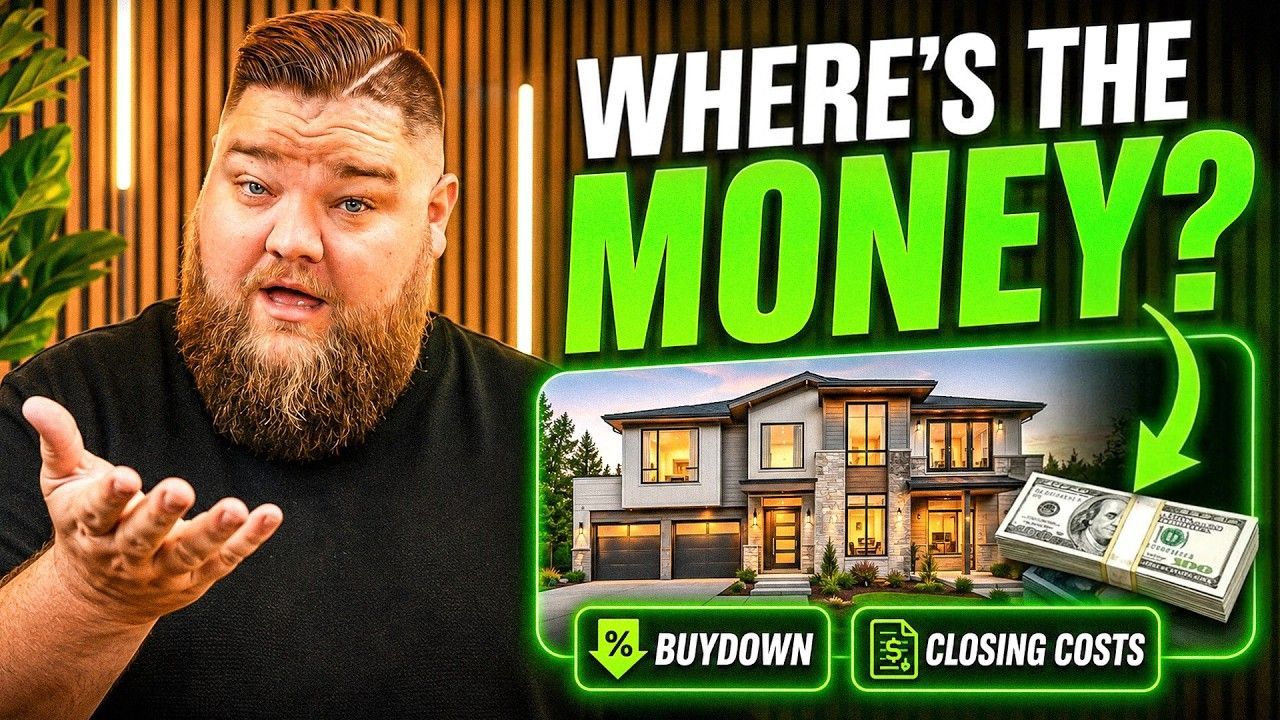
- mortgage rate buydowns
- closing cost contributions
- price reductions
- design or appliance packages
- flex cash structured through preferred lenders
One of the clearest takeaways from the largest builders is that these incentives are not some random act of kindness. They are planned for. Budgeted for. Expected.
That matters because if we are buying new construction homes in DFW, we should stop treating incentives like a surprise bonus and start treating them like a real part of the deal structure.
In plain English, builders are spending money to keep sales moving. They have homes to close, numbers to hit, and inventory they do not want sitting too long.
2. Sales pace matters just as much as price
Several builders made some version of the same point. They would rather maintain sales volume than let inventory stack up.
That means even if headline pricing looks firm, there may still be room through financing incentives, lot premiums, closing costs, or inventory-home discounts. Builders hate stale inventory. It ties up capital, slows community momentum, and creates pressure on margins.
So when a builder says they are adjusting to market conditions instead of waiting for the market to improve, what they often mean is this: we will use incentives and strategic pricing to keep homes moving.
3. Some builders are protecting margins by trimming what they offer
This is where buyers need to pay attention.
More than one company hinted at improving margins through cost control. That can mean operational efficiencies, sure. It can also mean fewer included features, leaner finish packages, and more value-engineering.
In DFW, we have already seen examples of builders that skip things buyers assume will be standard, like garage door openers, garage texture and paint, sprinkler systems, or other items that used to feel routine.
So if we are buying new construction homes in DFW, the lesson is simple: do not compare builders on price alone. Compare included features, construction quality, lender structure, warranty responsiveness, and what actually comes with the home.
4. Spec homes are a major part of the strategy now
Some builders are leaning heavily into move-in ready or near-complete inventory. Meritage is a great example of this kind of model. They have become much more inventory-focused, with streamlined floor plans, limited personalization, and faster closes.
That approach can be great for buyers who want simplicity and speed. It can also mean less flexibility in negotiation, because the builder has a cleaner, more standardized system.
Think of it like this. Some builders want to custom-tailor the deal. Others want to make the process more like a retail transaction. Neither is automatically better. It just means we need to know which kind of builder we are dealing with.
5. Builders do not all use the same pricing strategy
One builder made a point of saying they prefer transparent pricing over inflated pricing hidden behind flashy incentives.
That is an important distinction.
Some builders raise base prices and then “give back” money through lender deals or promotions. Others try to keep pricing more straightforward and advertise cleaner numbers online.
For buyers, the takeaway is not that one approach is always better. The takeaway is that we need to compare the total deal, not just the sticker price.
A lower base price with weak financing might be worse than a slightly higher price with an aggressive rate buydown. Or the opposite might be true. The math matters more than the marketing.
6. Higher-end builders are still using meaningful incentives
This part was especially revealing.
One luxury-oriented national builder disclosed that incentives were running around 8 percent of the sales price. That is a huge number. On a $450,000 home, that would be about $36,000. On a more expensive home, the dollars get even bigger.
That does not mean every buyer automatically gets 8 percent. It does mean builders themselves have told us the size of the bucket they are often working from.
And if we are buying new construction homes in DFW, that should change how we approach negotiation. We are not asking for magic. We are asking from a budget line that likely already exists.
7. Build-to-order homes usually carry better margins for builders
This is another underrated point. Builders often make more money when they build a home specifically for a buyer than when they are discounting completed inventory.
Why? Because build-to-order gives them better control over selections, upgrades, and pace. Spec homes move faster, but often at lower margins.
So if we are deciding between an inventory home and starting from dirt, we need to understand the builder’s motivation may be different in each scenario. Sometimes the best discount is on standing inventory. Other times, there is more flexibility in how incentives get applied on a to-be-built home.
8. Land control is a long game, and builders want flexibility
Several companies talked about lot pipelines and option contracts. That may sound boring, but it matters.
Builders are trying to control enough lots for future growth without taking on too much risk if the market slows. Optioned lots give them flexibility. They can step back if demand weakens. They can accelerate if sales pick up.
What that means for us is this: builders may act confident publicly about long-term growth while still being very tactical in the short term on pricing, starts, and community expansion.
9. Some builders are shifting upmarket
One builder’s comments strongly suggested a move away from the lower price bands and into higher price points where incentives can be absorbed more profitably.
That is a bigger deal than it sounds. If more builders pull out of entry-level pricing, the affordable new construction options in DFW get tighter. That can change where buyers need to search, which communities remain competitive, and which builders still offer genuine first-time-buyer value.
10. Buyers needing extra time is no longer unusual
Another interesting theme was that many buyers need longer between contract and closing. They may need time to save for the down payment, improve credit, or sell an existing home.
Builders are aware of this. In some cases, they are already planning for it.
That does not mean every builder will accept every contingency. But it does mean we may have more room than the sales office initially suggests, especially on a full build where there is time for a home sale or financing prep.
Key Trends in Buying New Construction Homes in DFW
When we zoom out, a few consistent patterns show up.
- Demand is softer than builders hoped. Even in strong migration markets like DFW, the pace has not always matched expectations.
- Affordability is still the issue. Builders know buyers are payment-sensitive, which is why financing incentives remain a big lever.
- Margins matter a lot. Builders are trying to keep profits intact, whether through feature trimming, faster inventory turns, or smarter land deals.
- Growth is still the long-term bet. Many builders remain optimistic about Texas and especially DFW.
- Negotiation is back on the table. Things that were non-negotiable during the frenzy are often negotiable again.
That last point is huge for anybody buying new construction homes in DFW. A lot of buyers are still behaving like it is 2021. It is not.
You still need to move when a good deal shows up. But you do not need to walk in assuming the builder holds all the leverage.
What These Builder Insights Mean for DFW Buyers
DFW is a unique market because we still have population growth, job growth, and a ton of new development. That keeps the long-term story strong.
But that does not mean every builder, every neighborhood, or every price point performs the same way.
Some communities are selling fast. Some are sitting. Some builders are aggressive on lender incentives but rigid on price. Others are more willing to cut price on inventory homes. Some offer solid quality at the entry level. Others look good online and disappoint when we get into the details.
That is why broad market headlines only get us so far.
For buying new construction homes in DFW, neighborhood-level knowledge matters. Builder-level knowledge matters. Timing matters. Inventory status matters.
How to Negotiate New Construction Homes in DFW Smarter
Here are the biggest practical takeaways.
Know that incentives are a budget item
We should absolutely appreciate a good rate buydown or closing cost offer. But we should also understand what it is. It is a sales tool. Builders have dollars allocated to get deals done.
That means it is reasonable to ask for a stronger structure, as long as the request makes sense within lender guidelines and the actual economics of the deal.
Negotiate both price and incentives
A lot of buyers think they have to pick one. Not necessarily.
Depending on the home, how long it has been sitting, what phase the community is in, and what the builder needs that month or quarter, there may be room on both sides of the equation.
Not crazy room. We are not turning a $400,000 house into a $250,000 house. But can there be movement on price plus lender money plus title costs plus maybe some upgrades? Absolutely, sometimes.
Learn the builder’s calendar
Public builders live by reporting cycles. End of month, end of quarter, and fiscal year-end can all create leverage points.
If a builder needs units closed for a reporting period, that can create opportunity. The same house in the same community may be negotiated differently depending on timing.
Do not panic over “this incentive ends Sunday”
Sometimes incentives do expire. Sometimes rate promos are funded in batches and really do run out. Sometimes the deadline is real.
But sometimes it is also a pace-management tactic.
That is why the best approach is not blind panic and it is not total stubbornness either. If the home and deal are strong, move decisively. Just do it from a position of information, not pressure.
Always get a home inspection
I do not care who built the house.
If builders are pushing volume, speeding up production, or working to improve margins, that is exactly when independent inspections matter. Fast construction and quality construction are not always the same thing.
Even if the builder has a decent reputation, get the inspection.
Do not limit yourself to the biggest public builders
The public builders help us read the market, but they are not the only option. DFW also has strong regional and private builders. In Texas, there are plenty of buyers who end up preferring companies like Highland, Perry, Chesmar, Pacesetter, and others depending on budget and location.
The large public builders often act like the canary in the coal mine. They show where the broader market is heading. But they are not automatically the right fit for every buyer.
Remember that builders need you too
This may be the biggest mindset shift of all.
Yes, buyers need housing. Yes, builders have product. But especially in a slower or more affordability-constrained environment, builders need contracts, closings, and velocity just as much as buyers need opportunity.
When we are buying new construction homes in DFW, we should walk into the process understanding that leverage is not one-sided.
VIEW NEW CONSTRUCTION DEALS IN DFW
FAQs About Buying New Construction Homes in DFW
Are builder incentives really negotiable in DFW?
Often, yes. Not every builder negotiates the same way, and not every home has the same flexibility, but incentives are commonly budgeted into the deal structure. That can include rate buydowns, closing costs, or price adjustments.
What is the biggest mistake buyers make when buying new construction homes in DFW?
The biggest mistake is assuming the sales office has all the leverage and the first offer is the best offer. Another major mistake is focusing only on base price instead of the total package, including financing, features, and inspection risk.
Should we choose an inventory home or build from scratch?
It depends on timing, flexibility, and the builder’s strategy. Inventory homes may come with stronger immediate discounts or faster closing options. Build-to-order homes may create different opportunities through selections and incentive structuring.
Do new construction homes in DFW still need inspections?
Absolutely. New does not mean perfect. Independent inspections are especially important when builders are trying to move volume quickly or protect margins.
Are all public builders bad choices?
No. There are public builders that can be a great fit depending on the community, budget, and deal. The point is not that builders are the enemy. The point is that they are businesses, and buyers need to understand how those businesses think.
What should we compare besides price when buying new construction homes in DFW?
Compare lender incentives, total monthly payment, included features, lot premium, construction quality, builder reputation, warranty follow-through, and how much flexibility the builder has on inventory versus to-be-built homes.
Final Thoughts on Buying New Construction Homes in DFW
Builders aren’t out to “get” you, but they are businesses driven by quotas, margins, land strategy, and sales goals—so when buying new construction homes in DFW, you should go in with clear expectations.
Recognize that urgency and incentive timelines are often planned, that model-home messaging can differ from what CEOs tell investors, and that faster isn’t always better. The more you understand the builder’s real incentives, pricing approach, and negotiation leverage, the better deal you can secure.
If you’re thinking about buying new construction homes in DFW and want a clear plan for incentives, pricing, and negotiation leverage, I’d love to help. Call 469-707-9077 or book a meeting here and we’ll go over your target neighborhood, budget, and what to ask in the sales office.

Zak Schmidt
From in-depth property tours and builder reviews to practical how-to guides and community insights, I make navigating the real estate process easy and enjoyable.