How to Beat High DFW New Construction Mortgage Rates and Save Big
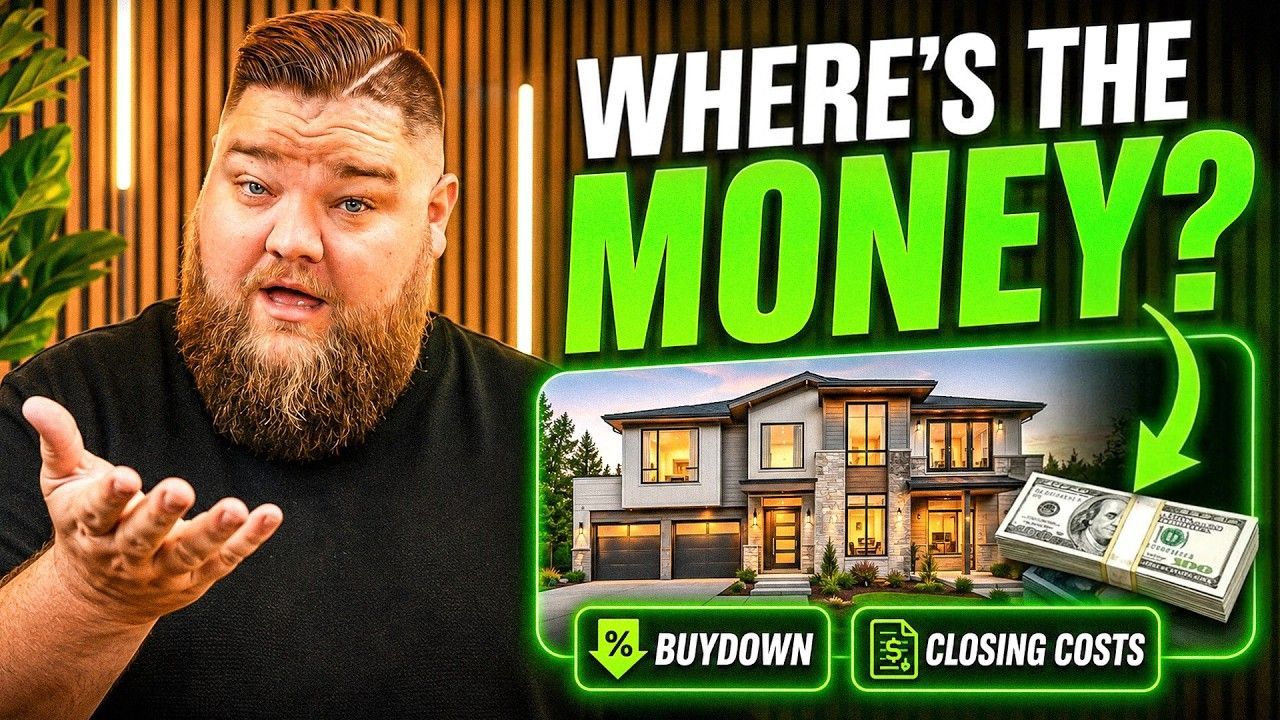
DFW new construction mortgage rates are top of mind for anyone thinking about buying a newly built home in the Dallas–Fort Worth area. Interest rates are higher than they were a few years ago, builders are layering in creative incentives, and taxes and fees shift affordability fast. This guide breaks down the practical choices you face, how builders structure incentives, when a preferred lender makes sense, and concrete tactics to control out-of-pocket costs while keeping monthly payments manageable.
Table of Contents
- Introduction
- Why Jared Wilson is a Top Mortgage Lender for DFW New Construction Buyers
- Should You Use a Preferred Builder Lender for Your DFW New Construction?
- How DFW Mortgage Rates Impact Your Home Buying Decisions
- Price Reductions vs. Builder Incentives: Which Is Better for DFW New Construction?
- Understanding Property Taxes in DFW New Construction and How They Affect Your Affordability
- Exploring Incentive Options for DFW New Construction Homes
- Step-by-Step Guide: How to Get Pre-Approved for DFW New Construction Loans
- What is Forward Commitment and How Does It Benefit DFW Homebuyers?
- Jared Wilson's Top Advice for First-Time Homebuyers in DFW
- Spec Homes vs. Building Your Dream Home in DFW: Which Is Right for You?
- Conclusion: How to Leverage DFW Mortgage Incentives and Save Big
- FAQs
- Final Note
Introduction
The fundamental problem is simple: DFW new construction mortgage rates affect not only monthly payment size but also which incentives make sense. The right lender—one who understands the nuances of new construction and local dynamics—can help you translate builder offers into immediate, tangible savings rather than future wishful thinking.
CHECK FOR NEW CONSTRUCTION DEALS IN DFW
Why Jared Wilson is a Top Mortgage Lender for DFW New Construction Buyers
Jared Wilson brings more than a decade of mortgage experience and a recent focus on new construction lending. He moved from a high-volume call-center environment to focusing intentionally on client relationships and builder partnerships. That client-share approach means Jared Wilson prefers doing fewer deals but doing them well—building trust with agents, builders, and buyers.
Should You Use a Preferred Builder Lender for Your DFW New Construction?
Preferred builder lenders get a bad rap sometimes. The reality is nuanced: builder relationships exist to reduce friction during a multi-month new build process. Preferred lenders are familiar with title quirks, plats, DED restrictions, appraisal tendencies, and underwriting expectations for each community. That institutional knowledge reduces surprises and the overhead associated with repeated qualification checks during a build.
When to consider a preferred lender
- If you want stability during a multi-month construction timeline.
- If your deal relies on builder incentives that are tied to in-house lending.
- If the builder has a complex title or development structure (municipal utility districts, PIDs, etc.).
Still, you do not have to use the builder's preferred lender. The trade-off is incentive dollars. Builders often compensate preferred lenders for the extra administrative overhead and risk management of new construction financing; they pass that cost back to the buyer in the form of incentives. If you bypass the preferred lender, you might lose some or all of that money—unless the builder agrees to move it.
How DFW Mortgage Rates Impact Your Home Buying Decisions
When will rates come down? Nobody knows the exact timing. Jared Wilson believes we could see meaningful improvement within months rather than years, but putting a firm “3%” date on the calendar is unrealistic. What matters for buyers: rate movement changes the calculation of incentives, and because new construction timelines are long, builders sometimes hedge that volatility via incentives.
Two practical implications for buyers:
- Plan for the current rate environment when qualifying. You must qualify at the rate used for loan approval, even if a buy-down temporarily lowers early payments.
- Use builder incentives strategically so you control near-term cash needs and keep options open to refinance when rates drop.
Price Reductions vs. Builder Incentives: Which Is Better for DFW New Construction?
Here's the most practical riff: given a choice between the builder lowering the sales price or giving the same dollar amount as closing-cost/incentives, most buyers benefit from the latter.
Why? A price reduction reduces your down payment and future qualifying balance only in a cosmetic way. If you are putting 10% down on a $400,000 home, a $20,000 price cut reduces your down payment by $2,000—not huge. But a $20,000 builder concession applied to closing costs or a rate buy-down reduces what you physically bring to closing right now. That immediate cash relief matters.
Rule of thumb: If you need to lower out-of-pocket cost today, ask for concessions to cover closing costs or a lender credit rather than a straight price cut. That 20K in incentives feels immediate. You're controlling an asset for less money up front, which is often the wiser move.
Understanding Property Taxes in DFW New Construction and How They Affect Your Affordability
One thing about property taxes is it's the government subsidy for not having state income tax
Property taxes in DFW are a big affordability factor. They can erase tens of thousands of dollars of purchasing power because lenders include estimated taxes in your monthly housing calculation. Typical effective rates in some DFW neighborhoods can run 2.5% or higher when MUDs and PIDs are included.
Key points to remember:
- Tax rates are often higher in growth areas because local improvements and utility districts add to the burden.
- As neighborhoods mature and home values rise, tax rates expressed as a percent can fall; the dollar amount often stays similar for local governments.
- If you qualify for a homestead or veteran exemption, investigate whether the exemption covers MUD/PID collections—often it does because those assessments are levied through the appraisal district.
Exploring Incentive Options for DFW New Construction Homes
Builders use a range of incentive structures. Pick based on your timeline, finances, and goals. Typical options include:
- Flat flex cash (e.g., "$20,000 in flex cash" applied as you choose).
- Appliance/upgrade packages (washer, dryer, refrigerator, blinds, etc.).
- 321 buy-downs and other temporary rate subsidies that reduce early payments but do not permanently lower your note.
- Forward commitment rate buy-downs that lock a lower rate for nearby spec homes (more on this below).
Jared Wilson's viewpoint is clear: for most buyers, take incentives you can feel today. The typical complaint with buy-downs like a 321 is that the funds are parceled out over time rather than delivered upfront. That reduces flexibility and removes compound potential. If the builder is offering a permanent rate buy-down paid to the lender as a credit, that can be a good use of builder dollars—provided you examine break-even.
Break-even matters. If you pay to buy your rate down, calculate how long it will take the monthly savings to recover your upfront cost. If the break-even period exceeds your expected ownership horizon, it may not be a good investment.
Step-by-Step Guide: How to Get Pre-Approved for DFW New Construction Loans
Pre-approval is not a waste of time for new construction. It identifies problems early—credit issues, required waiting periods, documentation gaps—so those fixes can happen while you shop. Jared Wilson stresses that pre-approval helps manage the multi-step qualification process builders expect through a build schedule: initial qualification, mid-build rechecks, and final pre-closing verification.
Practical tips:
- Get pre-approved early, even if you have not chosen a builder. Lenders appreciate the chance to spot issues and provide advice.
- Credit pulls from multiple lenders within a 45-day window generally count as a single inquiry for scoring purposes, so comparison shopping is safe.
- If the preferred builder lender cannot close your file, many builders will allow incentive dollars to be moved to a different lender later in the process—especially if the buyer is under contract. That flexibility is often overlooked.
What is Forward Commitment and How Does It Benefit DFW Homebuyers?
A forward commitment is a contract where a builder essentially buys loan dollars at current market cost to offer a lower-than-market rate on specific spec homes. It allows the builder to advertise a low rate, but it is limited by time and number of homes.
How it works:
- Builder identifies a batch of spec homes expected to close within a short window.
- The builder pre-purchases the loan pricing for those loans now and pays the cost to buy down the rate.
- The builder offers the lower rate to buyers on those specific homes. Availability is limited.
Pros and cons:
- Pros: Attractive lower advertised rates, immediate affordability for buyers, useful to move inventory quickly.
- Cons: Availability limited by closing window. If market rates drop further after the forward commitment is prepaid, the builder overpaid relative to the new market.
Jared Wilson's Top Advice for First-Time Homebuyers in DFW
Buying your first home in an inflated-rate environment requires strategy. Jared Wilson recommends:
- Buy in an area with strong appreciation or job-driven growth. Short-term value gains can outpace what you could save by continuing to rent.
- Choose a home that meets your needs for the short term. You can sell after a few years once the appreciation creates equity for your next purchase.
- Be realistic about upgrades—small, affordable projects can make a house feel like yours without massive cost.
New construction often delivers forced appreciation in growth markets because builders drive pricing in early phases and demand follows. The best values can appear either early in a phase or when a builder is closing out a community and wants to move remaining inventory quickly.
Spec Homes vs. Building Your Dream Home in DFW: Which Is Right for You?
Spec home versus building to order is a common buyer choice. Jared Wilson’s view has shifted in the current market: spec homes offer certainty—exact floor plans, known finishes, and established payments—whereas building can expose buyers to the risk of rising rates during construction.
If you need certainty on payment and timeline, spec inventory is often the safer route right now. If you must have personalization and are comfortable with potential rate movement during the build period, building makes sense—but account for that rate risk up front.
Conclusion: How to Leverage DFW Mortgage Incentives and Save Big
To win with DFW new construction mortgage rates, think strategically about how incentives are structured, prioritize reducing immediate cash needs, and work with a lender who understands the timeline and local quirks. Pre-approval early, careful selection between price cuts and lender credits, and attention to forward commitment offers can all add up to major savings.
CHECK FOR NEW CONSTRUCTION DEALS IN DFW
FAQs
Do I have to use the builder's preferred lender to get incentives?
No. You are not required to use the builder’s preferred lender, but many builder incentives are tied to in-house lending. If you choose an outside lender, you risk losing those incentives unless the builder agrees to move them. If the preferred lender cannot close the loan, builders often will allow incentives to be reassigned to another lender once a buyer is under contract.
Should I take a price reduction or builder concessions?
For most buyers, concessions that reduce out-of-pocket costs now (closing costs, lender credits, or appliance packages) are more valuable than a straight price reduction. A price cut lowers the down payment only marginally, while concessions directly reduce what you pay at close or lower early monthly payments.
What is a 321 buy-down and is it worth it?
A 321 buy-down is a temporary subsidy where the builder reduces your payment for the first three years in stepped increments. It eases early affordability but does not permanently lower the loan’s interest rate. If the builder pays it, it can help you qualify or ease into payments—but it may be less flexible than receiving funds upfront.
How do property taxes affect my ability to buy in DFW?
Lenders include property taxes in your monthly housing payment when calculating affordability. DFW property tax rates (including MUDs or PIDs) can significantly reduce the loan amount you qualify for. Always include estimated taxes in your budget and ask your lender to run affordability tests that include those calculations.
What is a forward commitment and how can buyers take advantage?
A forward commitment is when a builder pre-buys loan pricing to offer lower rates on specific spec homes closing in a short window. Buyers who can move quickly and close within that window can lock a lower rate. Availability is limited, so flexibility and timing are crucial.
When should I get pre-approved for a new construction purchase?
Get pre-approved as early as possible. The pre-approval uncovers credit or asset issues, clarifies your realistic price range, and streamlines the process during the multiple qualification checkpoints required in new construction. Multiple lender credit pulls within 45 days are treated as one inquiry, so comparison shopping is safe.
Final Note
Working with a lender who understands DFW new construction mortgage rates and builder mechanics changes the game. If you want a low-risk path to homeownership in this market, prioritize pre-approval, demand clarity on incentives, and use concessions to lower near-term cash needs. That combination puts you in control whether you buy spec inventory or build.
Ready to take control of your DFW new construction financing and find the best path to lower monthly payments? Call me now at 469-707-9077 or book a time in my calendar to schedule a free consultation.
READ MORE: Tips for Buying a New Construction Home in DFW: Red Flags to Watch For

Zak Schmidt
From in-depth property tours and builder reviews to practical how-to guides and community insights, I make navigating the real estate process easy and enjoyable.